Messages From the Other Side: Two Exhibitions by Laura Whitcomb in Los Angeles
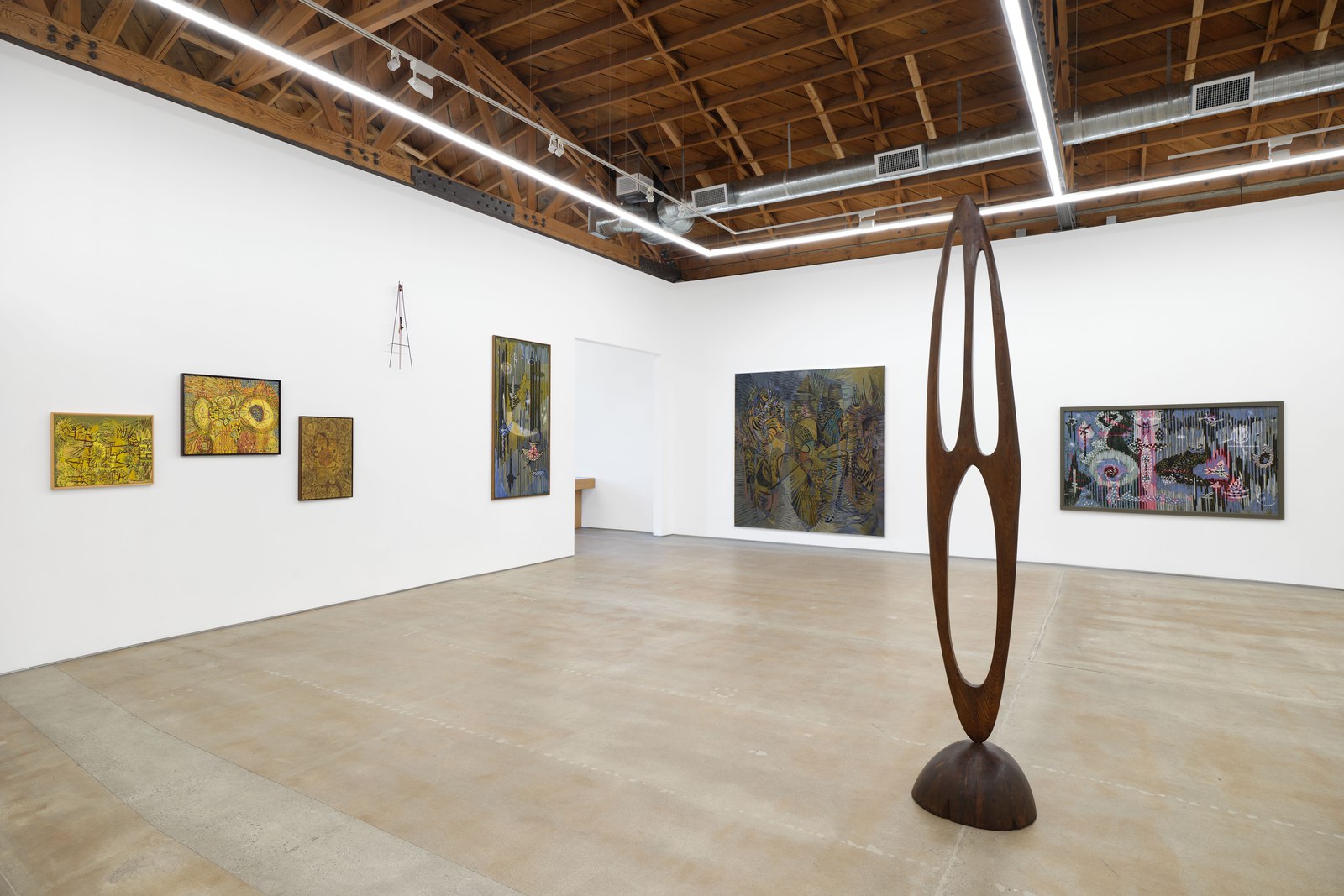
An inspired message isn’t simply delivered in sentences, visions or auditory moments: it is an unfolding process that repeats, expands and evolves. A spiral in time and ideas suggests growth outside simple repetition; it is, instead, an evolution, the gradual unfolding of creation. Progress finds itself branching out of recurring patterns of existence. The encounter of dictation and discarnate beings within artistic contexts fills forward-looking questions with expansive meaning. Progression of consciousness spirals onwards when inspired conversation finds sanctuary. Two recent exhibitions, “Dynaton: Convocation of Radiant Beings” (Château Shatto, June 5 to Aug. 1, 2026) and “Dictation from the Other Side” (Karma, July 23 to Sept. 12, 2026), both curated by Laura Whitcomb, the founder of Label Curatorial, examine how artists understood messages, presences, and nonordinary forms of intelligence as methodological. This allows the work a place to speak, expand and inspire change once more.
The exhibitions are a cluster of signals and harmonics, reintegrating energized artistic development as they center complex ideas that once received a biased welcome. Calling attention to these ideas today proves these conversations now find sanctum amongst endless turmoil and inspire hope within the viewer. “Dynaton” and “Dictation from the Other Side” display works of astonishing scale: Marjorie Cameron, Louise Janin, Gertrude Abercrombie, Marian Spore Bush, Wolfgang Paalen, Jacqueline Lamba, Paulina Peavy, Unica Zürn, Harry Partch, Aleksandra Ionowa, Gordon Onslow Ford, Leonora Carrington, André Masson, Roberto Matta and more visionaries congregate on walls and within display cabinets. Though separated in two different galleries, for two different presentations, within which rooms create more partitions, the togetherness of the ideologies and experiments, the communication and expansion of cosmologies grant a visual of the access to the other dimensions and planes of ideas. Like the people who created them, the thoughts that formed them and the beings that guided them into expression, the works presented are storied. Behind finalized pieces are networks of beliefs that emphasize divergent methods: cosmology, psychology, automatic practice, music, material experimentation, esotericism, and so on.
Each piece recounts a system of its own and the creations presented allow for the acknowledgment of different webs of awareness. Watching over it all is Laura Whitcomb’s palpable refusal to let these lie still, stressing the reinstatement of dictation as a missing term in the history of modernist art. Both shows act as a moving petri dish of ideas, amongst which are found a constellation of hermetic, scientific, magical, Theosophic thinking, which often parallel Indigenous cosmologies, participating in creating rest from an ego-driven world. Navigation throughout the rooms symbolizes paths and journeys of knowledge “in the service of healing” as forms and colors ebb and flow towards each other within and outside of the works. The artists, their pieces, the show then and the curation today can be experienced as interrogation: what can we continue to understand from it all now?
Revisiting “Dynaton” at Château Shatto
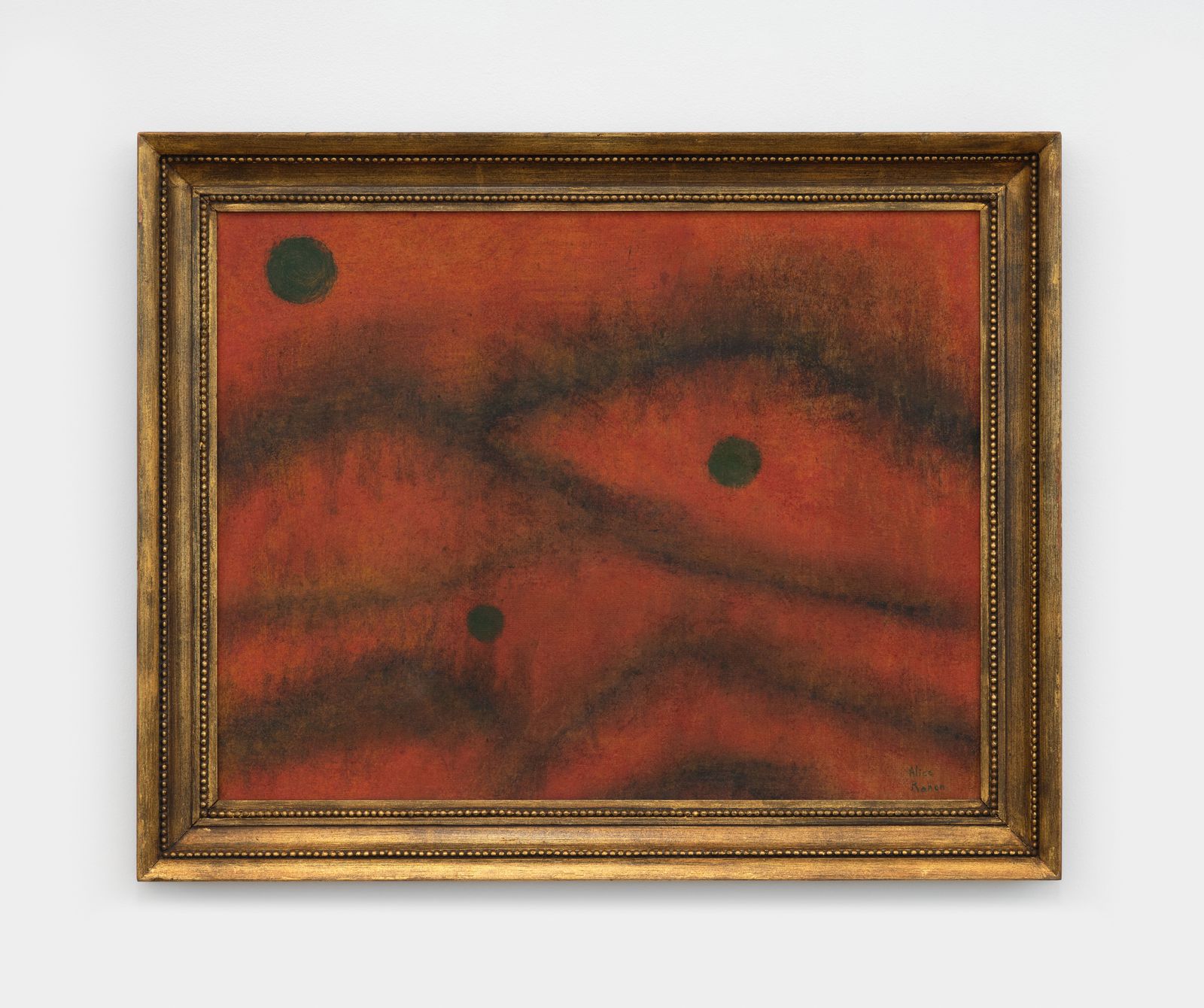
“Rather than treating California as a provincial outpost, Dynaton approached it as a laboratory where a reverence for Indigenous Mesoamerican cosmologies, quantum physics, Jungian psychology and extraterrestrial imaginaries could cohabit the same pictorial field,” says Whitcomb. Dynaton, founded by Onslow Ford, Wolfgang Paalen, Lee Mullican and fused with the philosophical writings of Jacqueline Johnson, was prompted by Wolfgang Paalen’s “Farewell au Surréalisme” (1942). The 1951 Dynaton show in San Francisco was a momentous show for California culture that anchored a group of artists’ interest in developing the echoes of these discoveries and conscious reasoning, enabling a navigation of the world that was “fluid, relational and no longer divisible into fixed subjects and objects.” Rather than using the development in physics and science for destructive war-related intentions of the time, artists were adamant on exploring growing discoveries as a means to explore them in conjunction with specific Indigenous cosmologies, in an effort to seek new consciousness. Paalen and Onslow Ford’s arrival to San Francisco from Mexico, by way of Europe, together with Mullican’s return from military service, was a very willful offset against the Manhattan Project and the then trajectory of the scientific developments at Berkeley and the Bay Area. The most recent restaging of the exhibition, developed out of additional scholarship and archives from the Lucid Art Foundation, demonstrates the enlargement of the possibilities presented by the artists at the time. This new curation of the seminal show features the original artists as well as the work of Leonora Carrington, Jeanne Reynal, Harry Partch, Alice Rahon, Luchita Hurtado and others, who have also explored the different dimensions of these perspectives and participated in Paalen’s Mexico-based publication DYN, “which was a philosophical think tank for what would soon congeal as Dynaton. The exhibition also restores Jacqueline Johnson to the account of the group as its essential fourth figure: a writer whose philosophical texts made its complex ideas legible to a wider audience,” says Whitcomb. In revisiting “Dynaton,” the show lets visitors experience and understand its constant relevance.
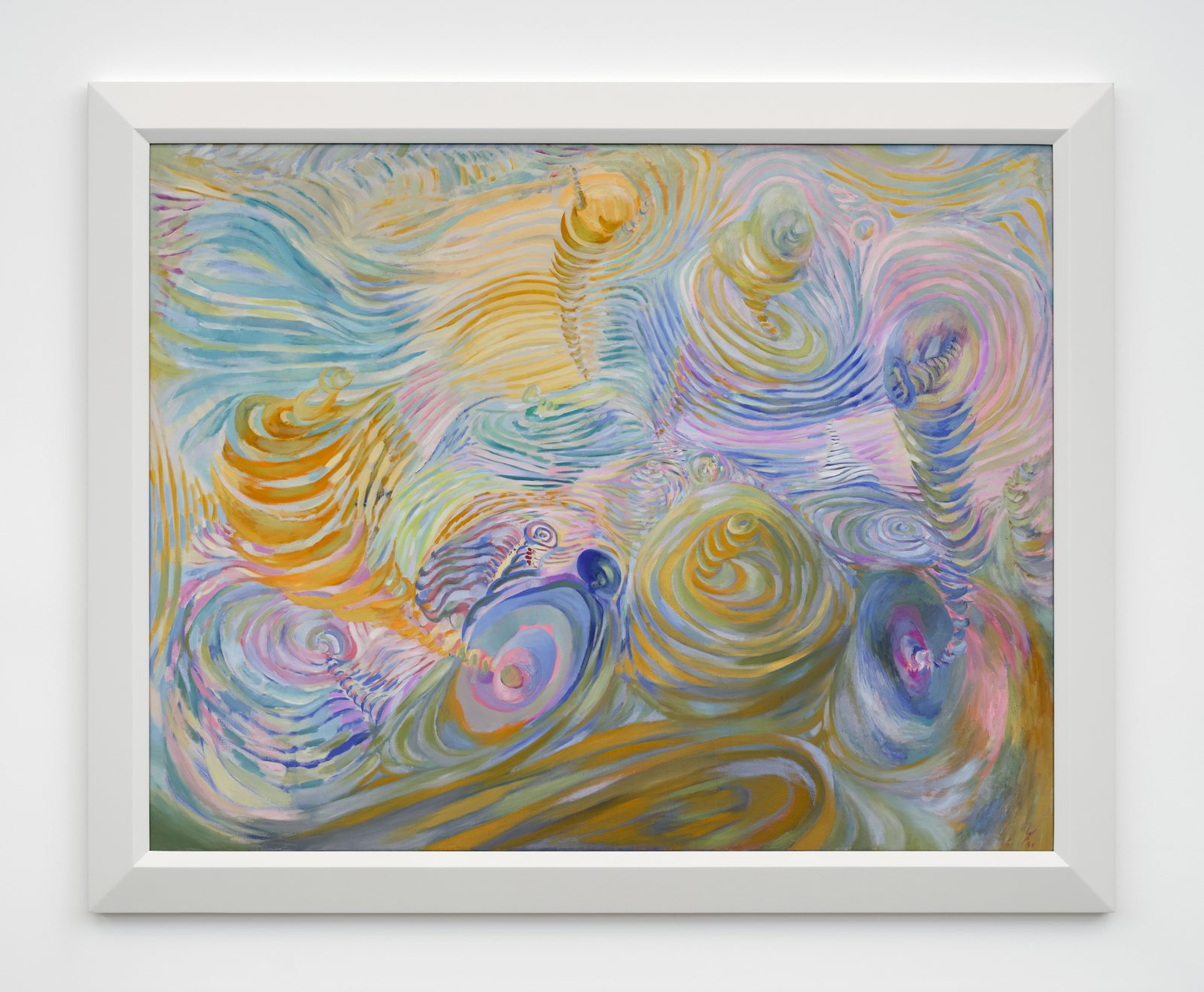
Surrealists would circumvent the conscious world to bring the untouched subconscious to the surface; the artists of Dynaton enlarged its possibilities instead. An early member of the original Surrealist group, Gordon Onslow Ford sought greater independence from the restrictions within the artistic movement. Dynaton crystallized ideas beyond the visible world, unraveling progressive happenings between the artists of the group and the presences the artists on occasion attributed to discarnate sources, in the tradition of Breton’s idea of Les Grands Transparents, welcoming a wider genealogy of ancient ideas. With this remaining one of the most underrecognized chapters in West Coast history, “Dynaton: Convocation of Radiant Beings” at Château Shatto, celebrating the 75th anniversary of the original San Francisco Museum of Art show, adds a new twist to its curling, as it highlights the equally seminal work of the women who contributed to its expansion: Jacqueline Johnson, Eva Sulzer, Luchita Hurtado, Alice Rahon and Jeanne Reynal. Philosophies and artistic freedom collide within its contents, creating new geography found within radiating maps of conscious discoveries. The results feel within reach: an inspired macrocosm echoes bacterial investigations in Lee Mullican’s Drawing 5 Series (1949) and Wolfgang Paalen’s “Messenger from the Three Poles” (1949) adds shape to extraterrestrial existence, the lungs of a prophet carrying an energy that “move[s] our bodies and minds” (DYN, 1942–44).
In “Take a Sight,” published in the original Dynaton catalog of 1951, the philosophical thinking of Jacqueline Johnson pinpoints the overall trajectory of the show:
“Beyond the edge of the known, beyond the corner where the mirror stops, there is the openness. And this openness invites us always toward a new unity of being, toward the unknown beginning to be known, out of which action finds again and again its proportion and its justness.”
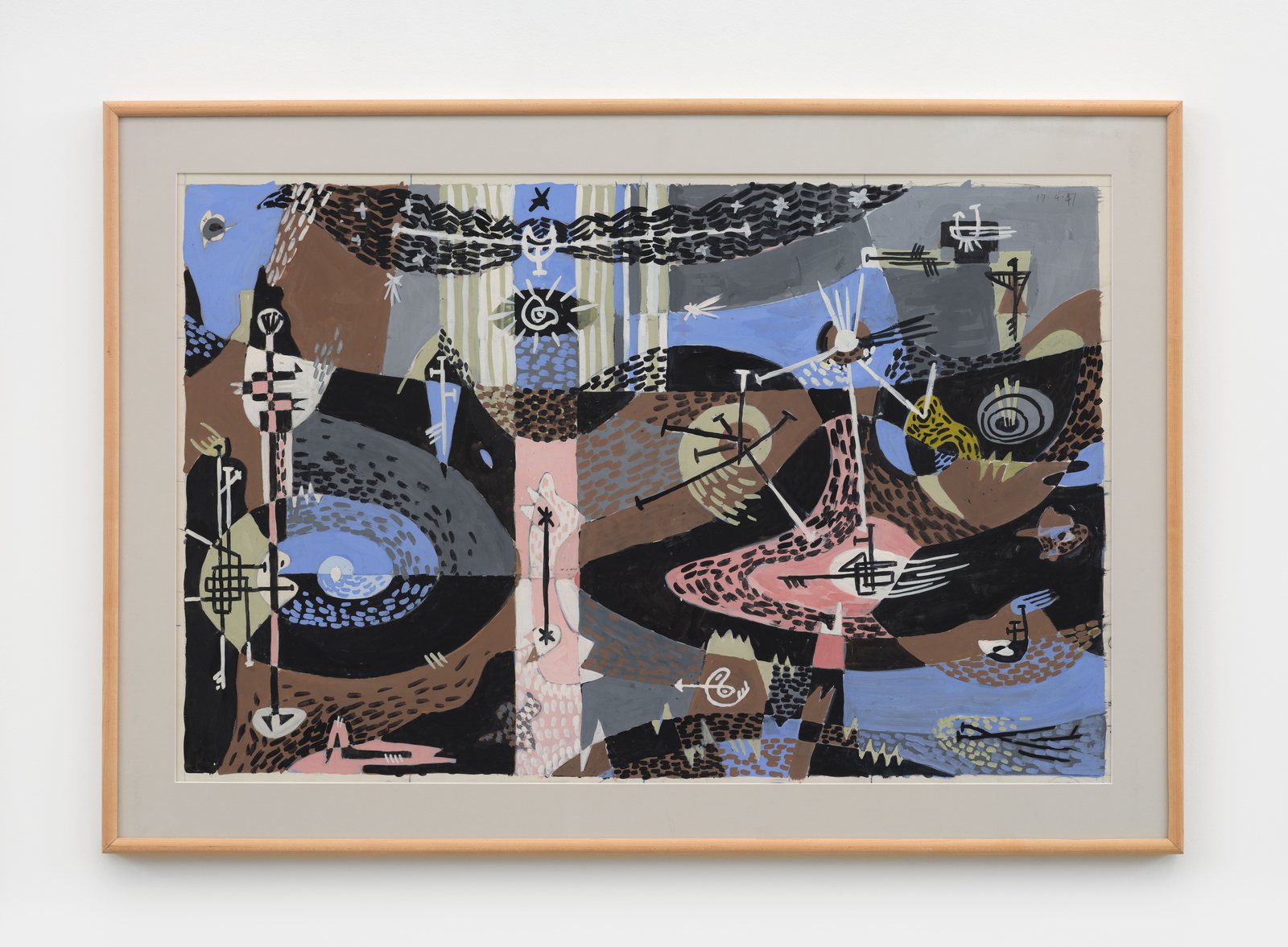
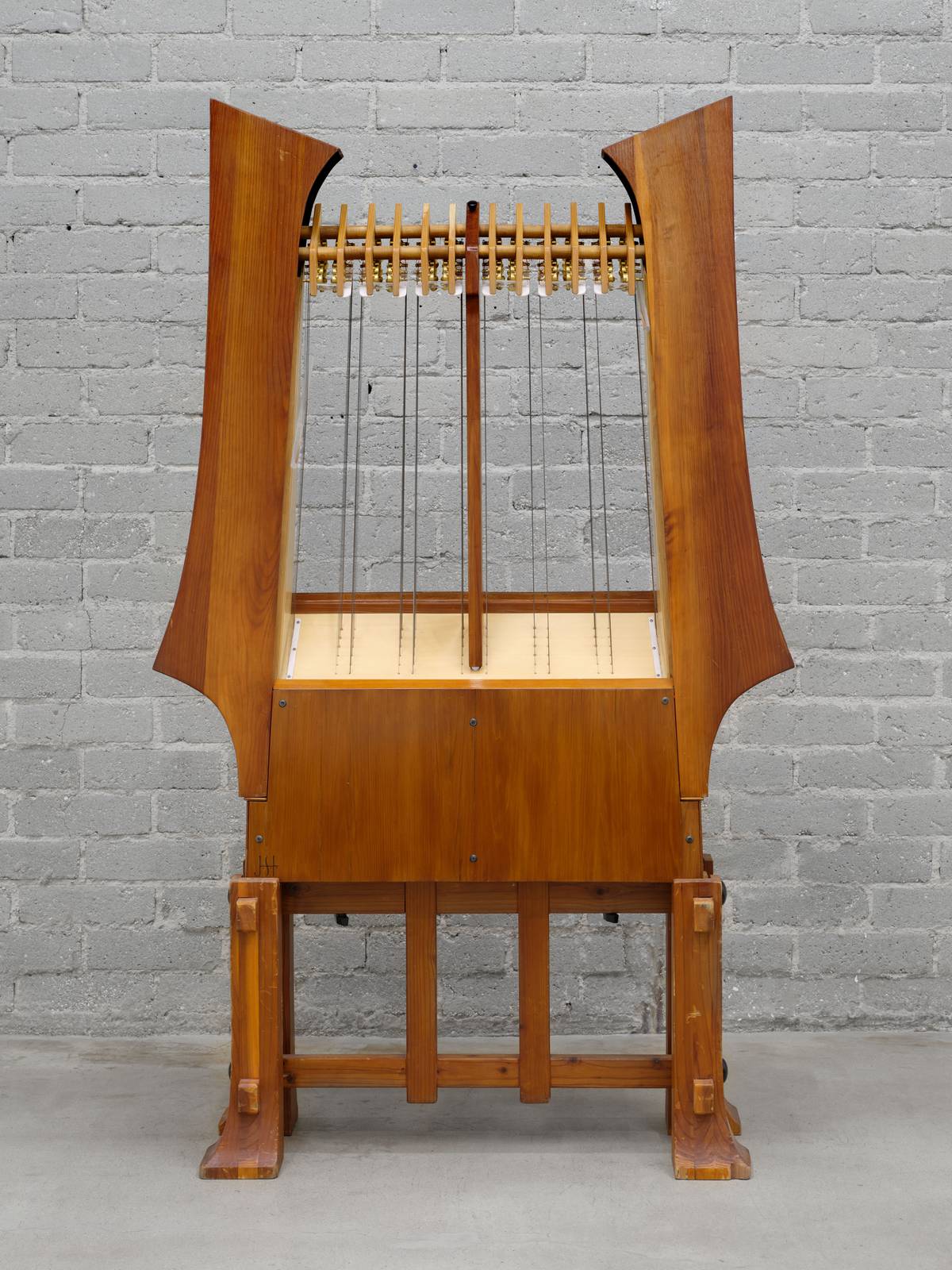
Further evidence into this lacework of investigation is seen in the additional ways Gordon Onslow Ford participated in the reverberating effect of its catalog by closely collaborating with Harry Partch, the composer, instrument builder and philosopher who revived Pythagorean tuning, “an intervention that helped set the microtonal zeitgeist and profoundly reshaped experimental music,” says Whitcomb, and “gave Dynaton’s return to ancient sources a reciprocal soundtrack, dually offering a gateway to access a lost consciousness.” Standing amongst the rest of the archive, “Kithara I” (1938–43), gives prominence to the force of Partch’s harmonics. The exhibition visitors feel their comprehension of the origins of mystical musicality expanding as the ancient wisdom takes shape.
The 2026 exhibition, “Dynaton: Convocation of Radiant Beings,” also asserts that Onslow Ford’s 1942 lectures at The New School were a catalyst to a series of ideas that would then be known as The New American Painting. “According to Martica Sawin, painters such as Rothko, Pollock and Motherwell were in attendance, hearing these ideas first-hand. In our account, those lectures become a crucial hinge - transmitting a British-Surrealist cosmology into the emerging Abstract-Expressionist milieu, before those same concepts are further developed on the West-Coast in the Dynaton Constellation,” says Whitcomb. “By bringing this influence forward, we challenge Clement Greenberg’s ‘virgin birth’ narrative of American postwar art and position the exhibition as a counterargument to histories that present postwar American abstraction as emerging apart from European Surrealism and its émigré networks.”
“Dictation from the Other Side” at Karma
A sense of fluidity within the nurturing of a more uniting form of thinking lies in the interpretations of messages communicated to the artists, each challenging and confronting rigid ideals of the time. Not unlike the philosophies deliberated in “Dynaton,” the artists in “Dictation from the Other Side” suggest their physicality as being tools: ones that celebrate joint efforts to unravel spiritual truths in asking the “unrational” world for more generous clarity. By melding the living body with the momentary disappearance of conscious thinking, they gain access to the extraordinary self by embracing “signals from beyond this world.” Whitcomb points out, “While both exhibitions’ broader gesture can be understood as psychic resistance through art, ‘Dictation from the Other Side’s’ particular historical focus is on the occult, esoteric, and Hermetic affiliations that shaped these artists’ practices. That distinction clarifies both the basis of their shared inquiry and what is distinctive about the Karma Gallery show.” In this exhibition, a room of artists expose a shared authorship through the unknown and accommodate silence into new beginnings. This was the case for the Surrealists’ muse, Hélène Smith (1861–1929), a medium whose visions and automatic writing she believed were encouraged by Leopold, a discarnate being who had accompanied her through her previous lives as Simandini Nayaka and Marie Antoinette. Like Smith, the channelers rendered “the other side” perceptible through trance, giving form to the unseen presences with which the artists understood themselves to be in dialogue.
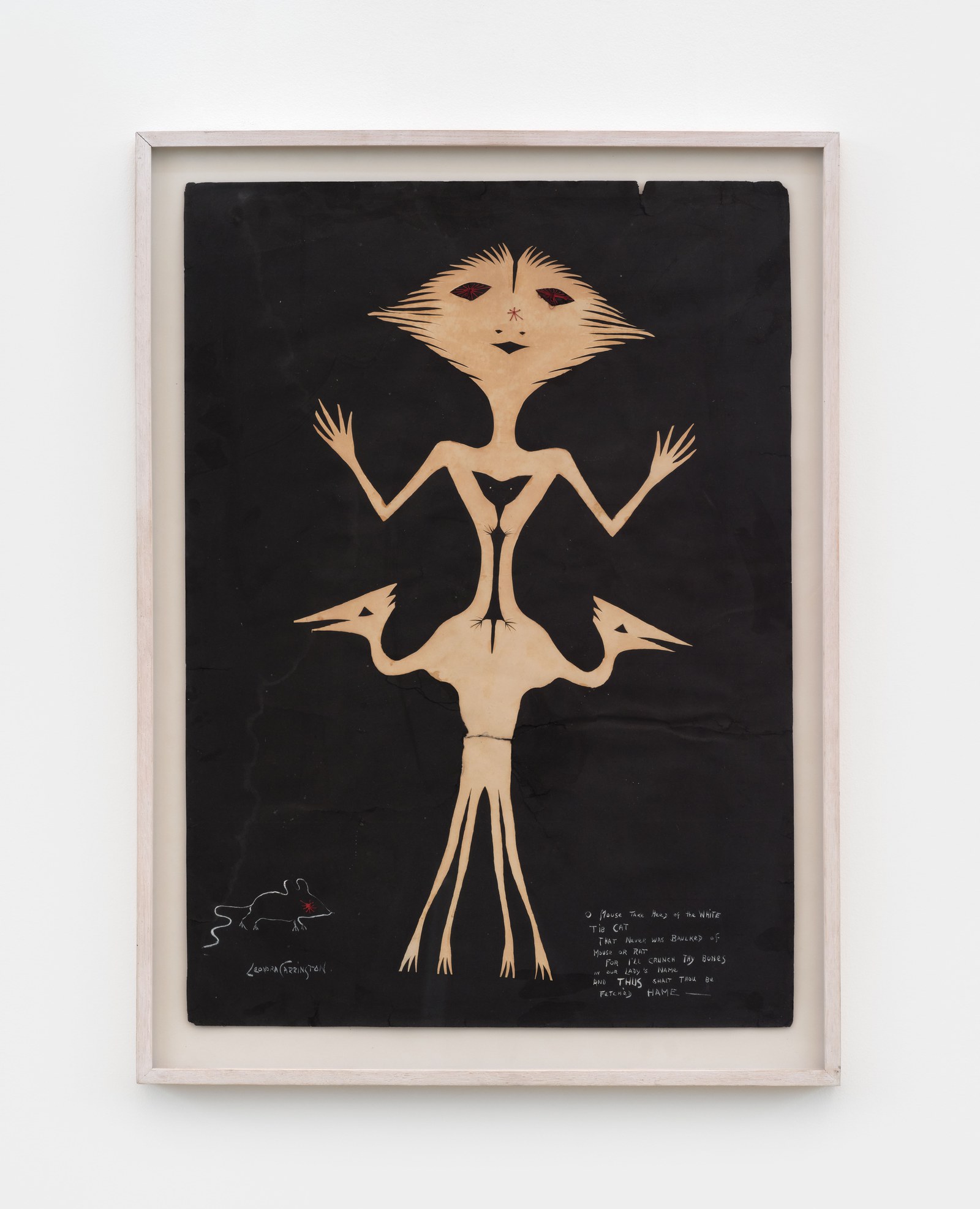
The exhibition gathers works by artists who answered fascism’s mobilization of symbols, ritual, and collective belief with hermetic study and magical practice. These works by Seligmann, Donati, Francés, Matta and Masson, place them as compatible allies for resistance against dominance. Such is demonstrated by the presence of “Fist” (1947), a sculpture created by Donati and used as a talisman in an Enochian ritual offered for the launch of Seligmann’s “The Mirror of Magic.” As seen with Dynaton emerging in San Francisco as the group’s direct refusal of the use of the scientific advancements, Whitcomb mentions the comparison with these Surrealists’ “countering fascism through the psychic incantations of art.” The divided rooms in “Dictation from the Other Side” take the viewer on a diversified group exploration of spiritual discoveries. In keeping with the celebration of what can be gained from unearthliness, the exhibition spotlights postwar America too. New research into the Lionel and Joanne Ziprin archive reveals their Lower East Side as a crucial center for Kabbalistic and Hermetic study. The harmonic engine within its probing housed Harry Smith, Jordan Belson, Bruce Conner and others. One encounters film, poetry, jazz, assemblage and small-press publication and fruit of this labor, with Charlie Parker as a fundamental player, as seen through the work of Wallace Berman, Gertrude Abercrombie, Arthur Monroe and others. Additionally, “Prince of Serpents” (1965) pitches itself as a clear mirror of Cameron, a suggestion of the artist’s mercurial double who considered herself a vehicle for the spirit of Babalon. Effervescent with spirituality and possibility is Betye Saar’s “Enchantress and Twilight Bird” (1964), the inspired motion behind music sings itself into new visuals through Ted Joans’ “Bird Lives” (n.d.) and possibilities fragment into new horizons through the collage work of George Herms, “Juggler” (1966). Gertrude Abercrombie watches over with “Self Portrait” (1935). After a lifelong study of symbolic forms and her participation in the Musicalist movement, Louise Janin returns to the West Coast for the first time in more than a century, with her Cosmogrammes, made in Paris, offering a rare opportunity to encounter her work. The intermediary between the tidings of the artists who birthed the works cradles the infinity of their ideas, tames the unfathomable, and, as asserted by the curator, show the final forms “not as biographical curiosities, but rigorous methodologies.”
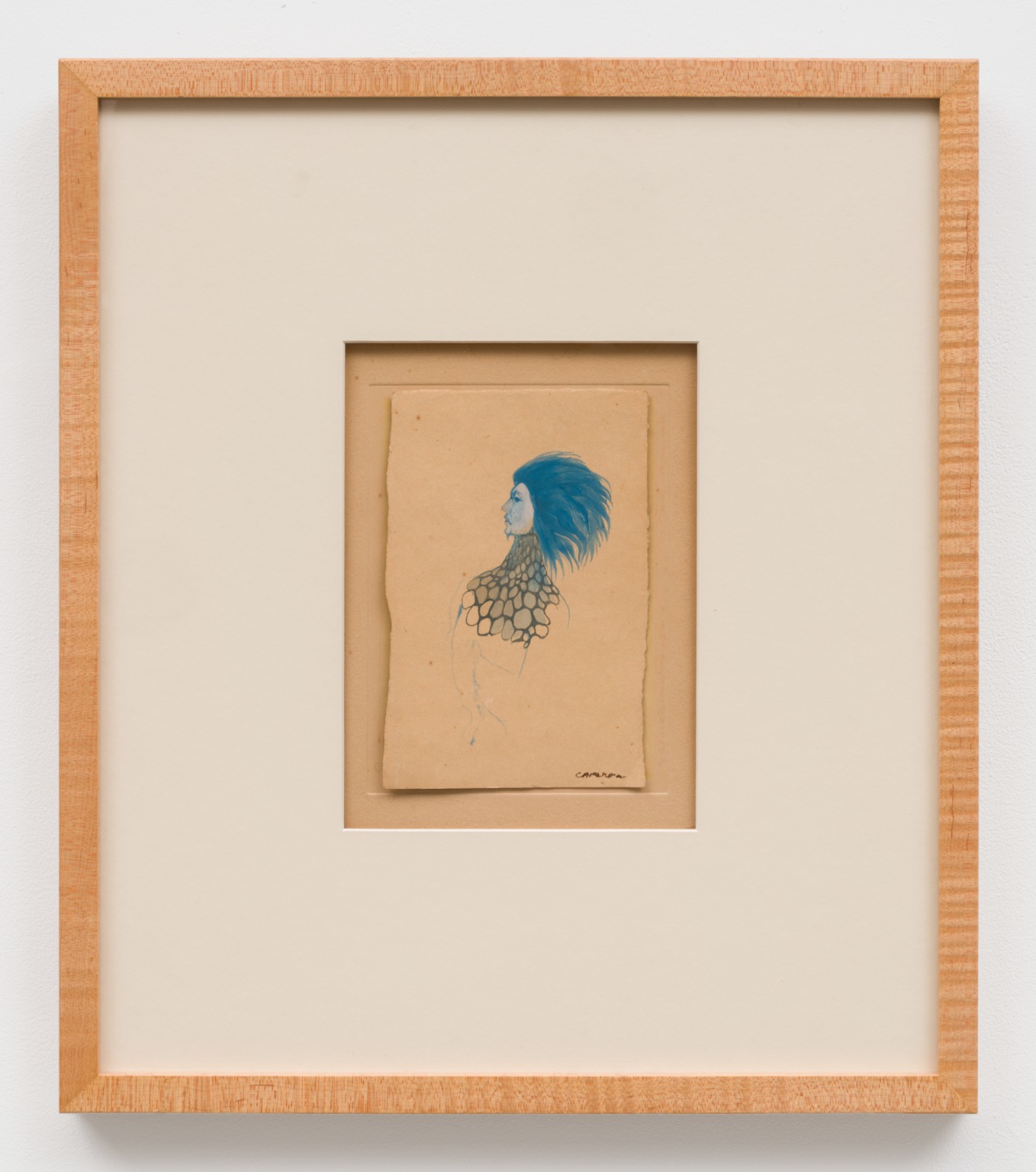
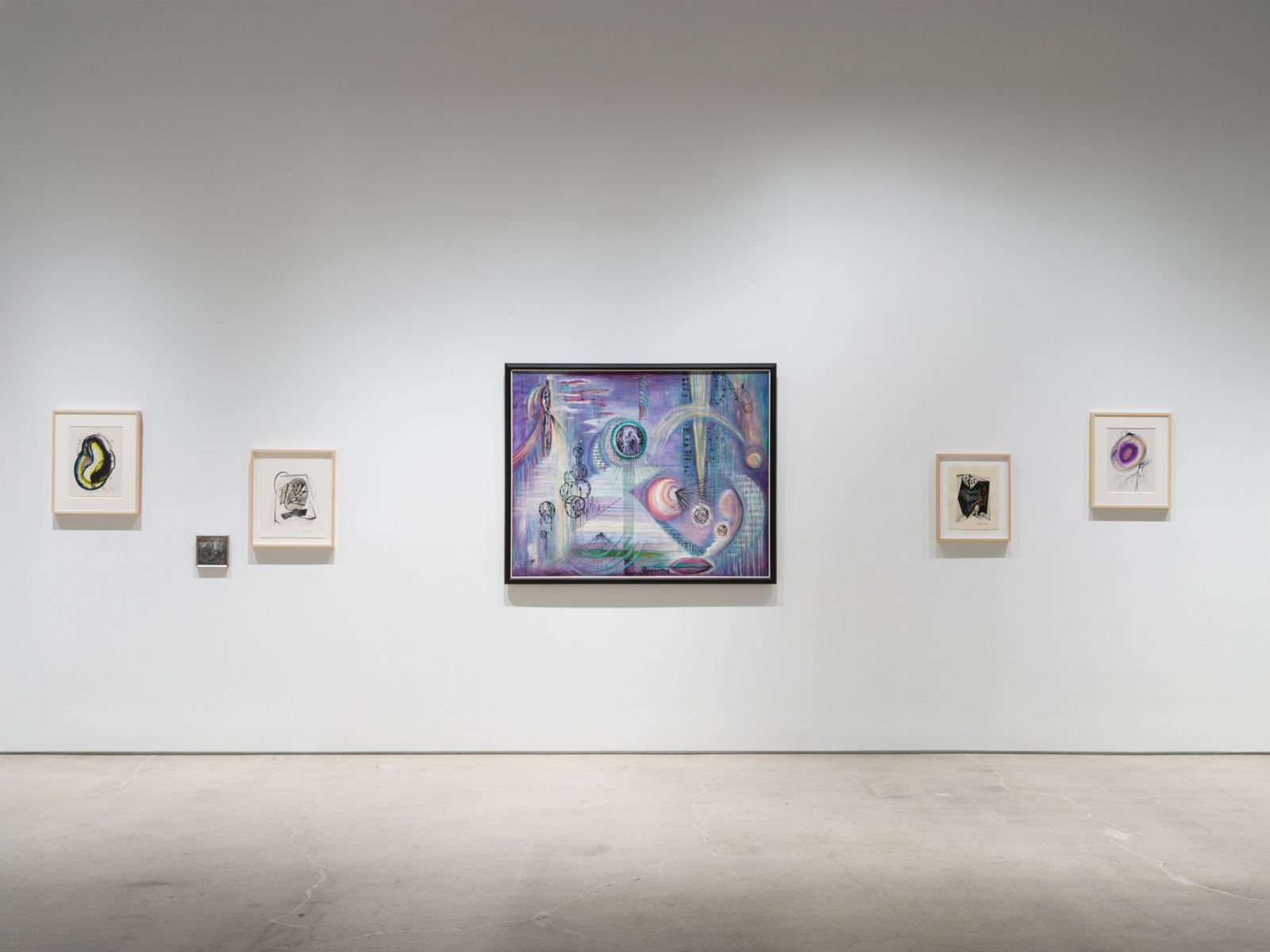
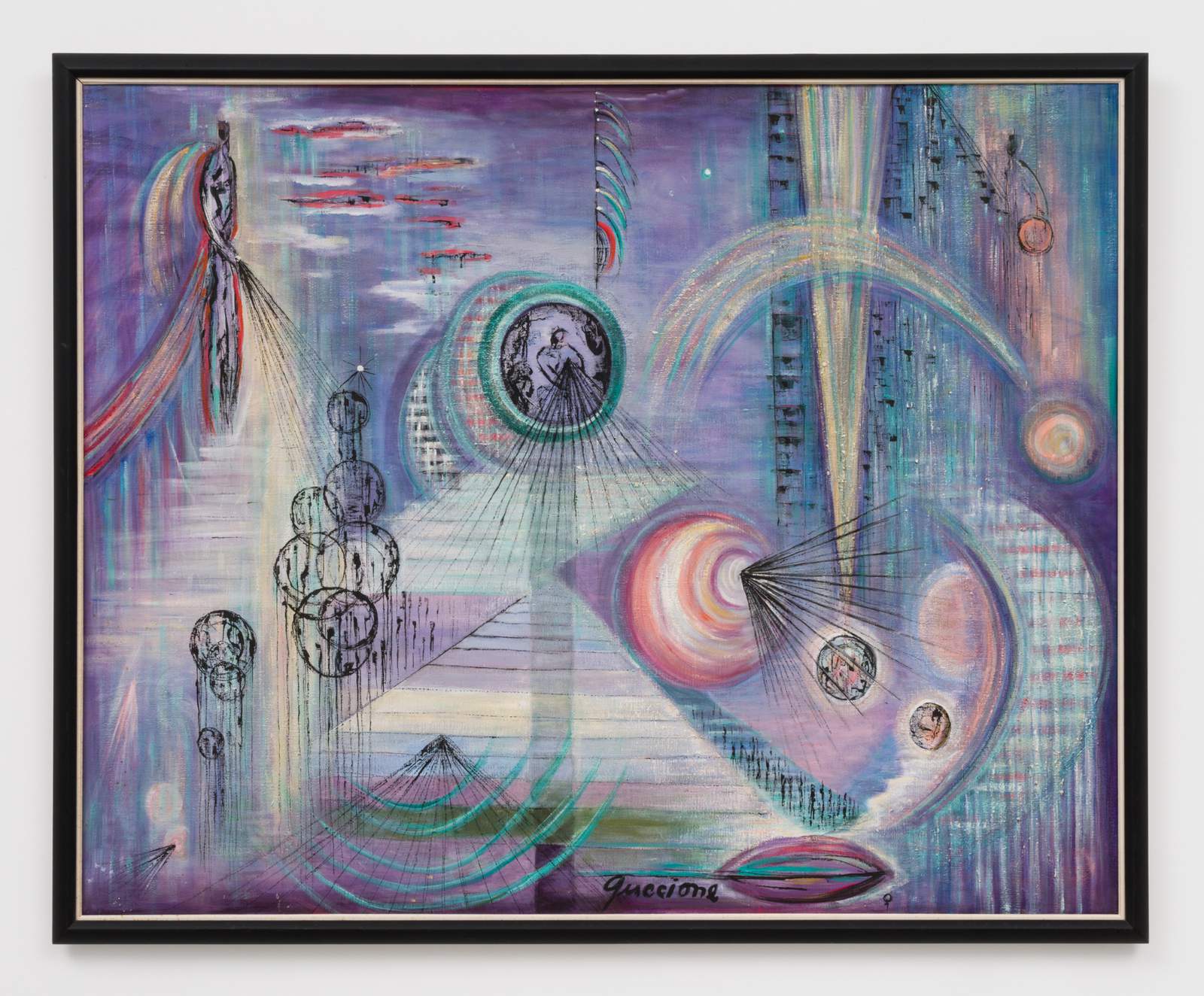
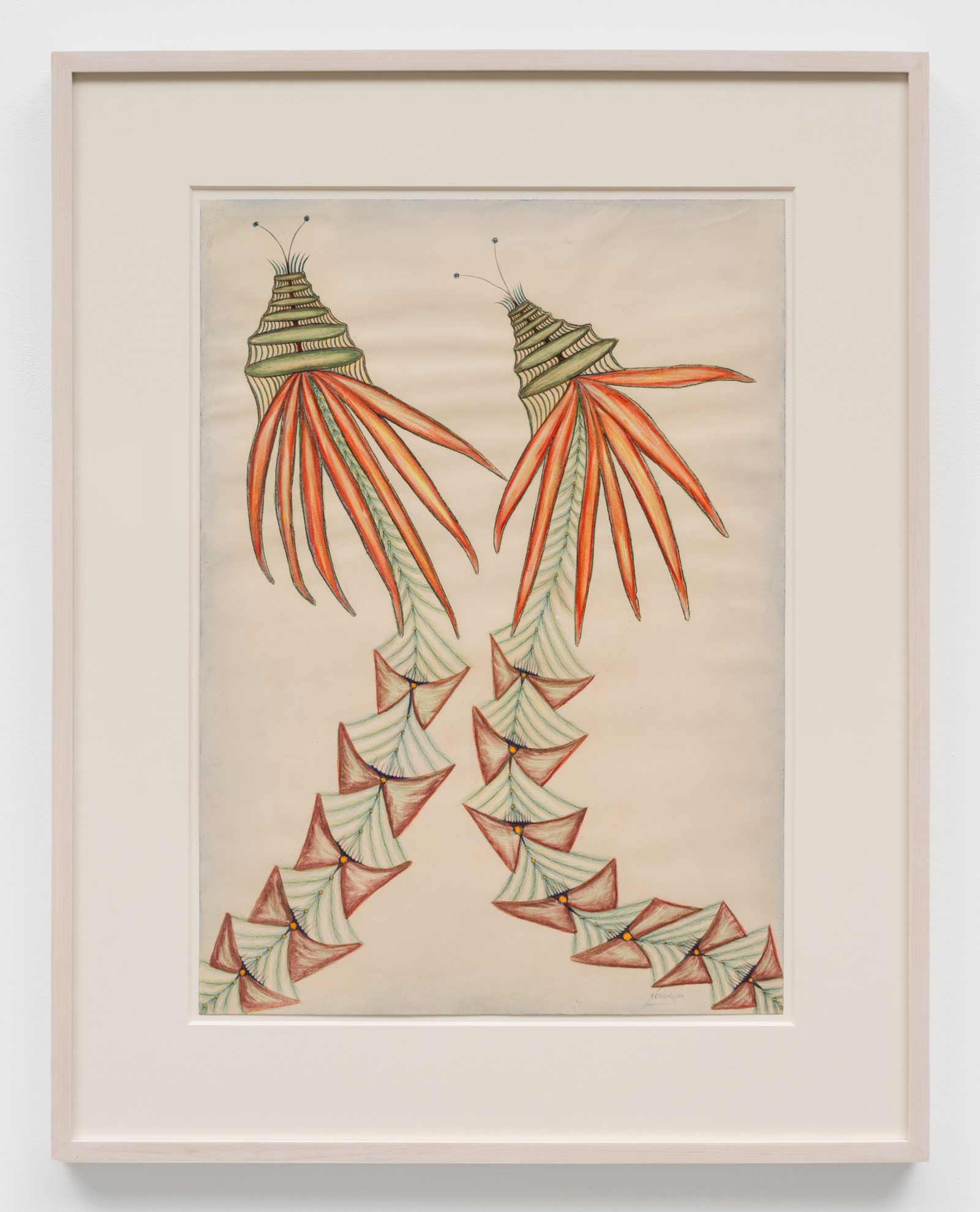
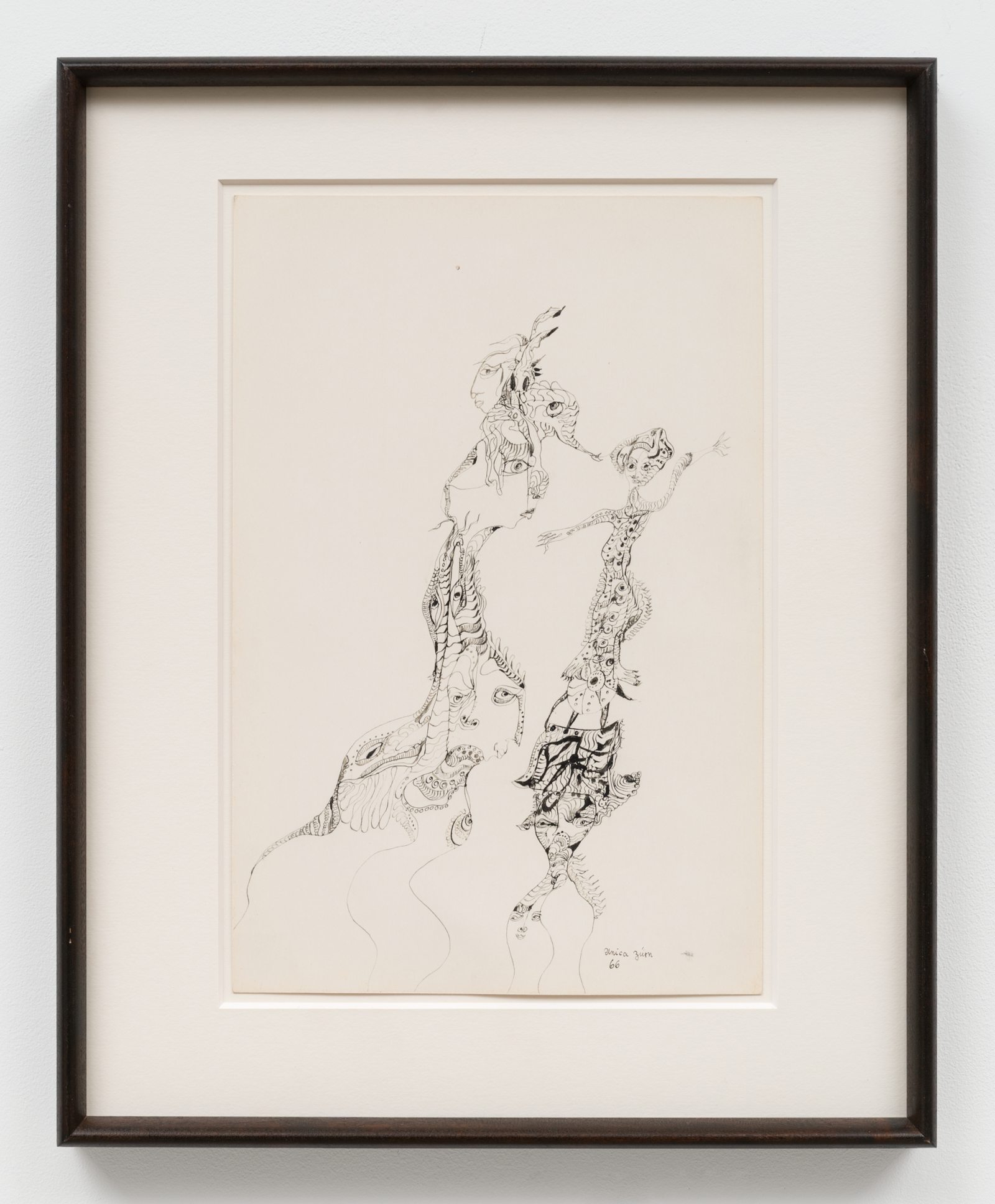
The mediumistic works of Madge Gill, Paulina Peavy, Louise Janin, Unica Zürn, Aleksandra Ionowa, Marian Spore Bush and others command inspired attention. “Theosophical and mystical explorations that anchor the broader spiritual lineage of the exhibition are underscored by Louise Janin, Juanita Guccione, and Beatrice Wood, along with Anna Zemánková, whose work offers a powerful example of an engagement with the Urpflanze, the primal plant understood as a source of imaginative creation and a portal to other worlds,” says Whitcomb. Entities interconnect within the automatisms presented, “accidental” shapes grow faces and nature becomes alive with clairvoyance through the eternalization of messages the artists attributed to varied intelligence and discarnate beings. From the works selected we learn courage in presenting subversive risk in the name of revolutionary ideas. Engagement with these seemingly immobile journeys preserve the greatness of strategies that celebrate precious humanity neglected by the societies during which they emerged. Paulina Peavy’s masks embody portals towards these different paths. The technique with which they came into shape underlined the deeply personal road Peavy never strayed from, and on which she encountered vital guidance and solace from the asserted belief in a spirit guide, Lacamo. Marian Spore Bush’s contact with entities referred to as “They,” with whom she worked in dialog with, culminating into impressive detail and technique as seen in “The Pawn Broker (Three Vultures)” (1933–34). The guiding entity Madge Gill referred to as Myrninerest is welcomed and eternalized through her generous body of work. Magical paths also present mystical ceramics, as the vessels created by Beatrice Wood, whose inspirations varied from Dada to Theosophy to Eastern Mysticism are offered for admiration amongst the gentle botanics of Aleksandra Ionowa and the complex bestiary of Unica Zürn. This assemblage shows women artists who developed disciplined visual, literary, and material procedures for working with trance, automatism, mediumship, dreams, and chance.
Signals From Beyond This World
In “Dictation From the Other Side,” the echo of a question asked by the curator surrounds the viewer: “how does modern art history change when form is understood as received rather than invented?” Considering the flowing explorations between both shows, this could also be asked off the back of visiting “Dynaton.” The egalitarian spaces boast work demonstrating the resistance towards dominant values and the far-reaching capability of consciousness as a driving force towards positive change. The different disciplines and variation of inspiration, guides, channelers and mediums don’t create a boundary between the different participants; they perform cumulative strength instead. The evocations of an oasis of progress and a sanctuary of thought entail being granted permission to belong, to speak and to erupt. A quote by Gertrud Sandqvist in “The Great Affirmations” feels particularly poignant:
In one way or another, the inner image, or visual idea, has to be transported to the outside world, so that it can be shared, and be visible to others. This transposition can be done using anything at all - signs, symbols, figures, colour fields, letters, words. It can be done with allusions, with invocations, with things that are not visual but aural. The process can be made to follow certain rules, which the artist sets for herself, and can be mingled with new, complex entities.
Whitcomb concludes, “Taken together, ‘Dynaton: Convocation of Radiant Beings’ and ‘Dictation from the Other Side’ make a case for turning toward the unknown and the ancient wisdom of the perennial philosophy—not as an escape from history, but as a salvific resource for humanity at what may be its most perilous hour.”
Laura Whitcomb’s exhibitions read like a set of correspondence between natural and supernatural sciences. The curation proposes the continuity of forces beyond rational thinking, as the information gained from a number of systems form parts of another. Here, the artists have done more than produce the silhouette of an idea; as they were shouting a desire to continue to stage extraordinary happenings, they eternalized its breath and let freedom and liberation spiral onwards towards dynamic consciousness.


