“Rooms by the Sea”: Susan Chen at Edward Hopper’s House
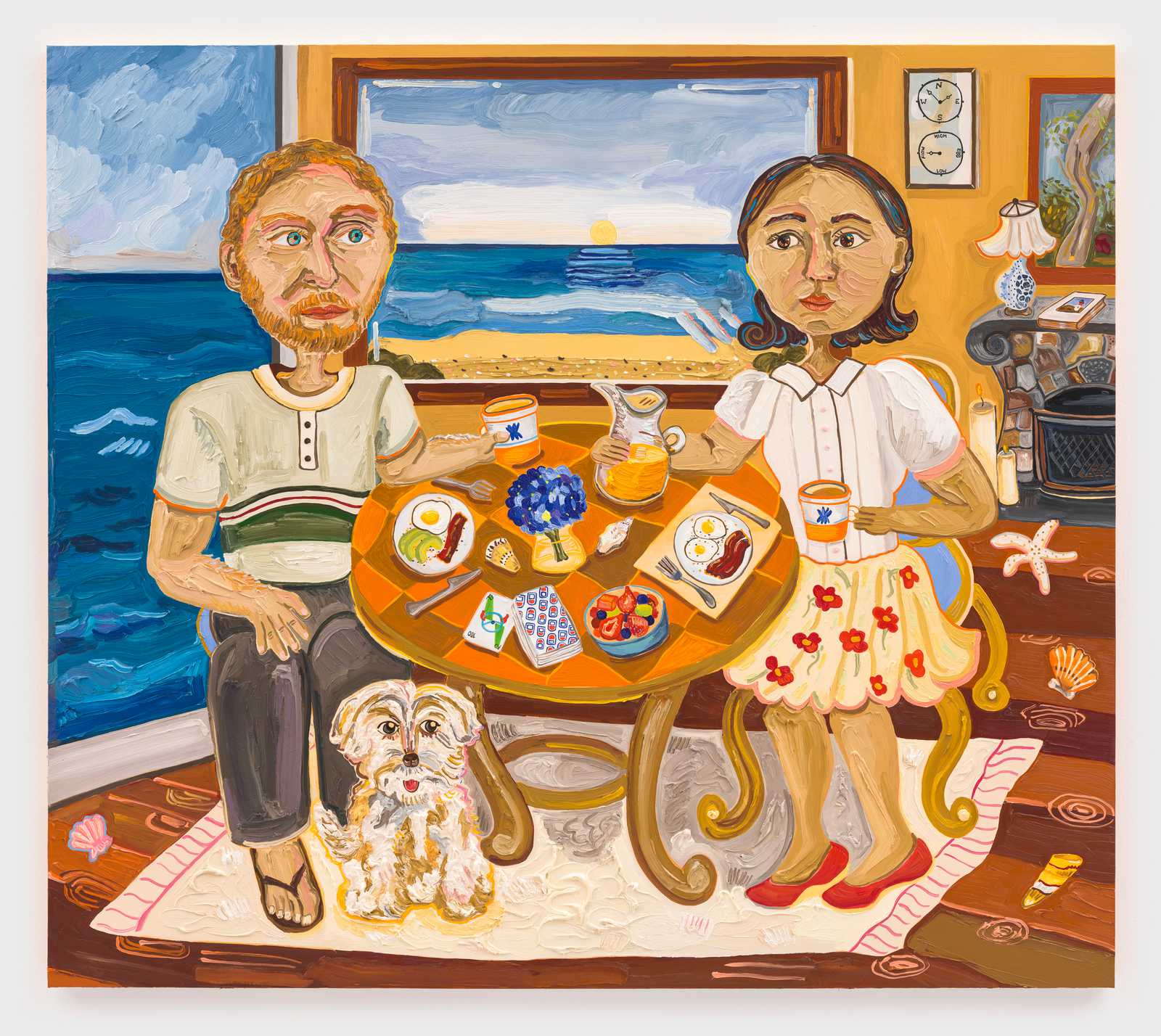
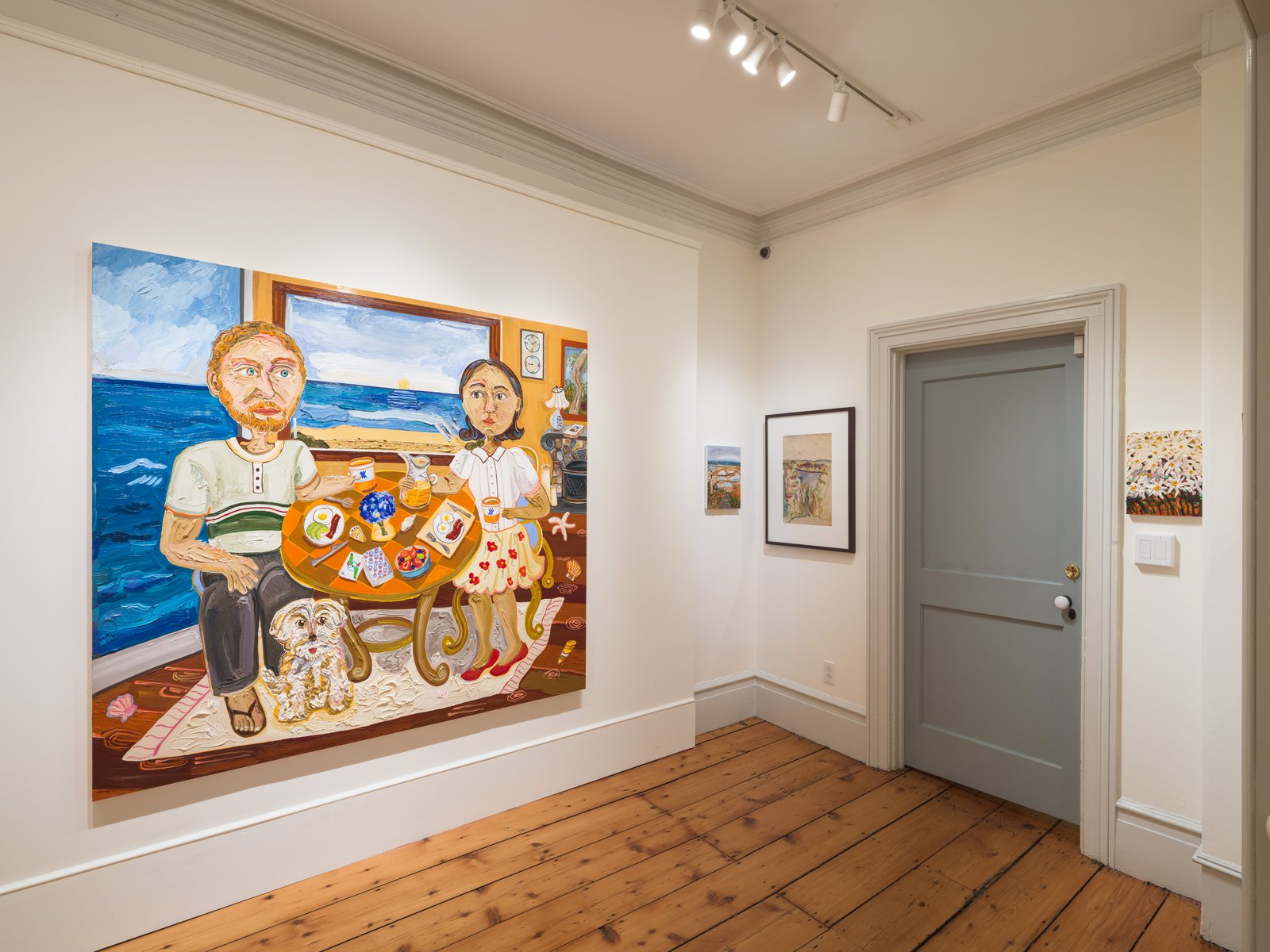
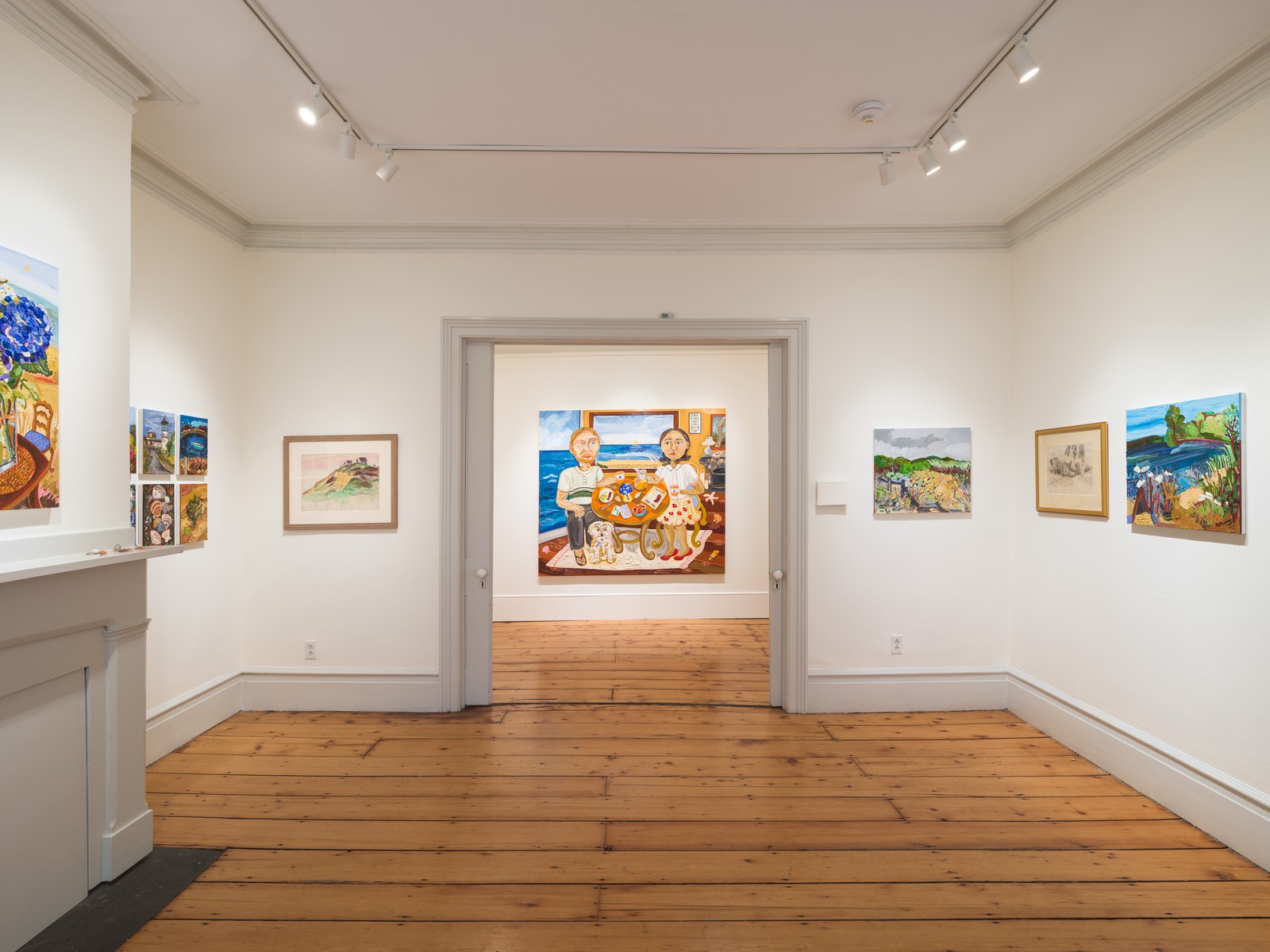
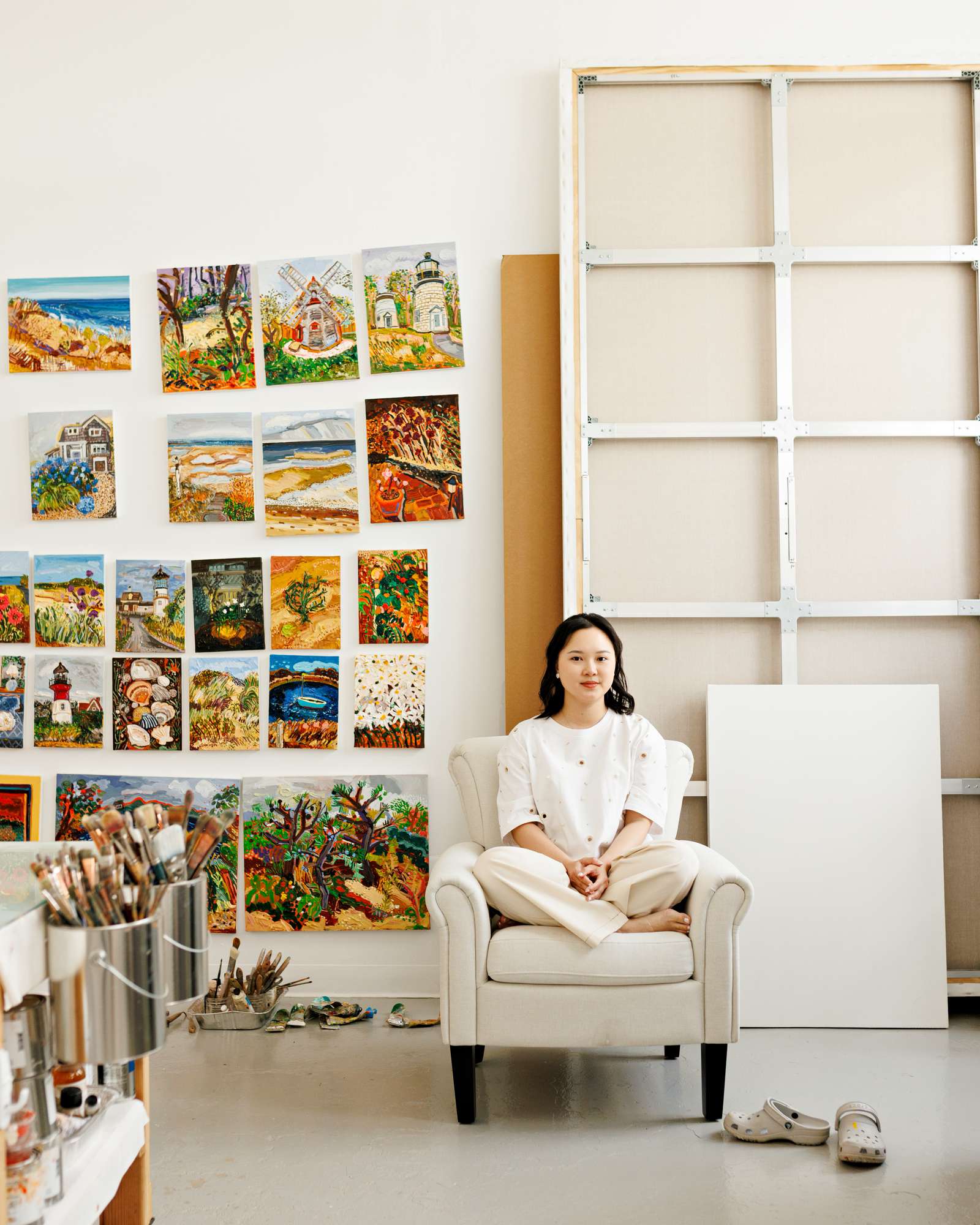
Susan Chen first went to Cape Cod in the summer of 2015 with her husband, then her boyfriend, whose family has a house there, and every year after that she thought she really wanted to make paintings there. In the summer of 2024 she snuck some canvases and a painting cart up with her and, as she puts it, fell into a wormhole of making paintings. The result is nearly forty canvases painted outdoors in Truro, Eastham and Provincetown, now on view in “Rooms by the Sea,” her first museum solo exhibition, at the Edward Hopper House Museum & Study Center in Nyack, New York, the house where Hopper was born and grew up. Her paintings hang with works on paper and watercolors by Edward Hopper and Josephine Nivison Hopper, and the title work is a large double portrait of Chen and her husband at the Cape, a nod to Hopper’s 1951 painting of the same name. We asked her about painting days, bugs and the Hoppers.
You left Hong Kong for school in England when you were 12. When did painting become the thing you wanted to do?
Susan Chen: Honestly, I never thought I’d get to be a painter for a living! And suddenly ten straight years of painting have flown by! It’s crazy. I’m incredibly grateful; it is such a privilege to get to go to the studio every week.
I didn’t take my first oil painting class until junior year of college, and then I became obsessed. I squeezed in visual arts as a double major and stayed on campus during summer and winter sessions to make it happen (I think I graduated with something like 39 credits when you only needed 30 to leave Brown.)
I don’t know if this is normal, but I think about painting a lot when I’m not painting. And if I go too long without making art, I get a bit restless, angsty, like there’s a horrible itch I need to scratch. Even when I’m not painting for a show, I make little gouaches, greeting cards, and drawings for fun. I keep a notebook in all my backpacks. Sometimes on the airplane, bus rides, I like to draw sketches or visions for paintings. I get painting visions all the time. I think what I’m trying to say is… it might just be a second-nature thing. Making art is not something I actually want to do, but I do it instinctively…
In fact, to this day, I still find painting incredibly difficult. I’ll be making a painting and think, wow, after a decade, this is still so hard! There are still so many challenges to conquer. Painting… it has a mind of its own.
Fourteen Paintings in Fourteen Days
You’ve spent every summer on Cape Cod for ten years. In 2024 the trip was supposed to be a break, but you came home wanting to paint the place. What happened?
Chen: My husband (then boyfriend) took me to Cape Cod for the first time during the summer of 2015. His family has a house there and they’ve been going for many generations. When I first got there, I thought, this place is incredibly beautiful. It’s no wonder artists have loved it throughout art history. It’s an artists’ haven. Every summer I made smaller paintings here and there, just for fun or for my family, and every year I thought, I really want to make paintings here.
I discovered the Eastham Painters Guild while I was there. It’s a group of local artists, mostly older, plus any hobbyists who want to drop in, who run a plein air painting schedule every summer. Every Tuesday they wake up early to paint at an assigned location on the Outer Cape. I was really inspired by their dedication.
In the summer of 2024, I snuck some canvases and a painting cart up with me and fell into a wormhole of making paintings. There was one trip where I made 14 paintings in 14 days, and I joked that it felt like a completion of my karmic journey. I also loved watching YouTube videos of Hockney painting in Yorkshire, specifically noting down all his logistics in order to paint large canvases outdoors.
There was one trip where I made 14 paintings in 14 days, and I joked that it felt like a completion of my karmic journey.
Being on the Outer Cape, it was hard not to be influenced by Edward Hopper. His name is everywhere, and scenes of his paintings are also very apparent. You go to Corn Hill Beach, and you realize, it’s Hopper’s Corn Hill painting. I biked past a yellow church and gas station, and realized, it’s the same church and gas station that appear in his paintings.
When I was offered the show at The Edward Hopper House Museum, I was introduced to Josephine Hopper’s work for the first time (Edward Hopper’s wife) and then I got to read a lot of Gail Levin’s essays on Edward and Josephine’s artistic lives together at the Cape. I thought about them as a couple painting there, especially since they’d been going since the 1930s. As a recent newlywed, I found it easy to wonder what their life at the Cape was like compared to ours. We live in the same neighborhood where I made all these landscape paintings.
You painted nearly forty canvases outdoors in Truro, Eastham and Provincetown, and you told the Provincetown Independent you’re “terrified of bugs.” What does a painting day look like?
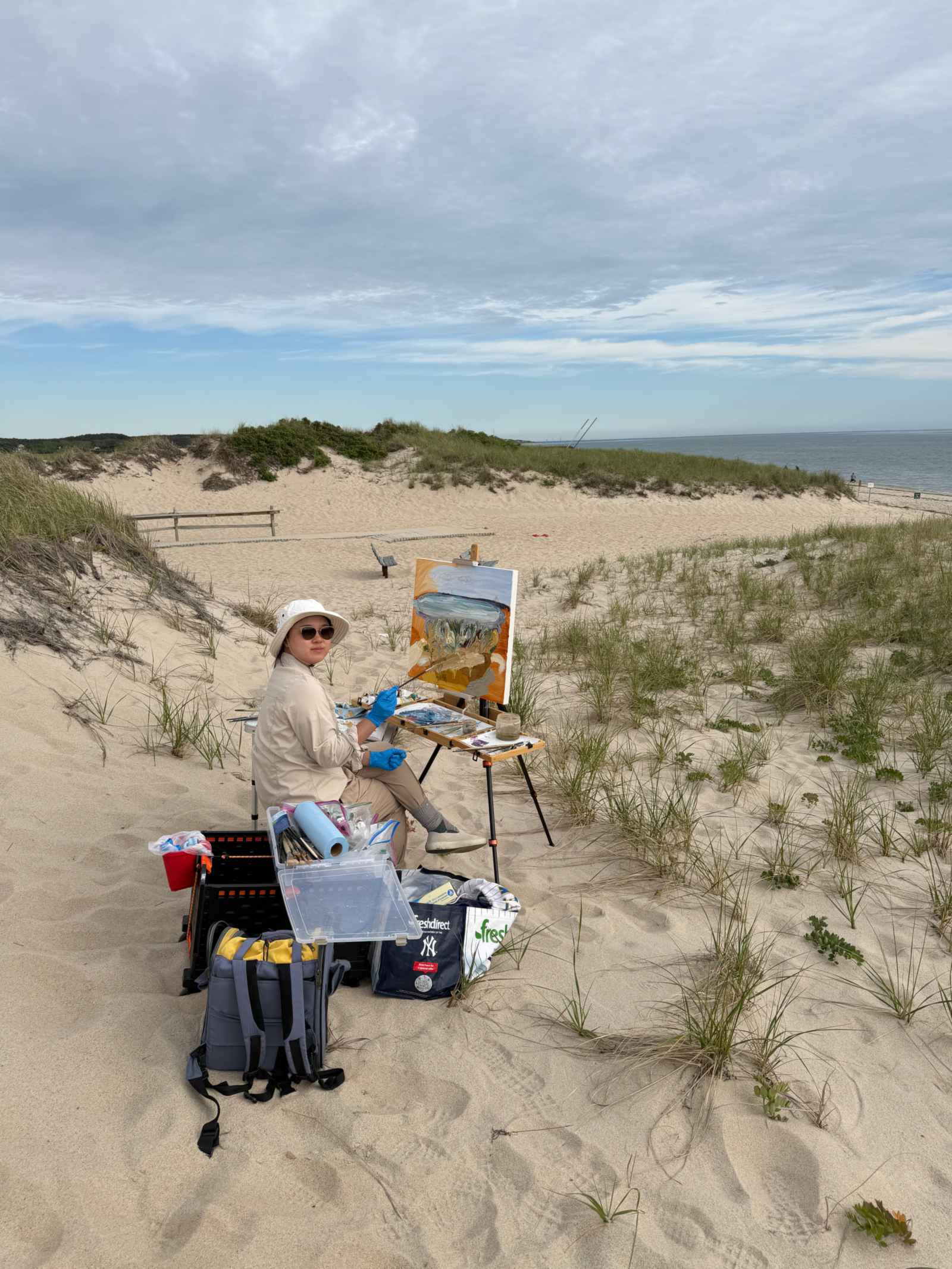
Chen: I roll out of bed, eat breakfast, and put on my full outfit of Insect Shield clothing, socks and all.
Then I cover myself in sunscreen and insect repellent, put on a sun hat, and hop in the car with my black wheely cart full of supplies: easel, paints, portable chair.
I check the weather, because it’s so finicky up there, with random rain clouds. I also check the tides and the sunset. Low tide and high tide change every day, and they dictate the bug swarms too. I usually have an idea of where I want to paint the night before, and it’s not as romantic as you’d think. It’s often a place with easy parking.
Once I set up my easel, I paint the whole afternoon, maybe six hours straight. Around five o’clock I brace myself for the swarm and often have to put on my black bug net hat. At that point I know I look a bit ridiculous to passersby. When the sun sets, I throw everything into the wheely cart and make a mad dash for the car, because that’s when the bugs really come out in full force. I wish I were braver and could hold out, but I’m quite the wimp.
Then I drive home with the wet painting in a FedEx box in the back of the car, and when I get home I inspect what the hell I made that day. I always complain about sunburn, heatstroke and bugs flying into my paintings, but then I’ll happily do it all over again the next day.
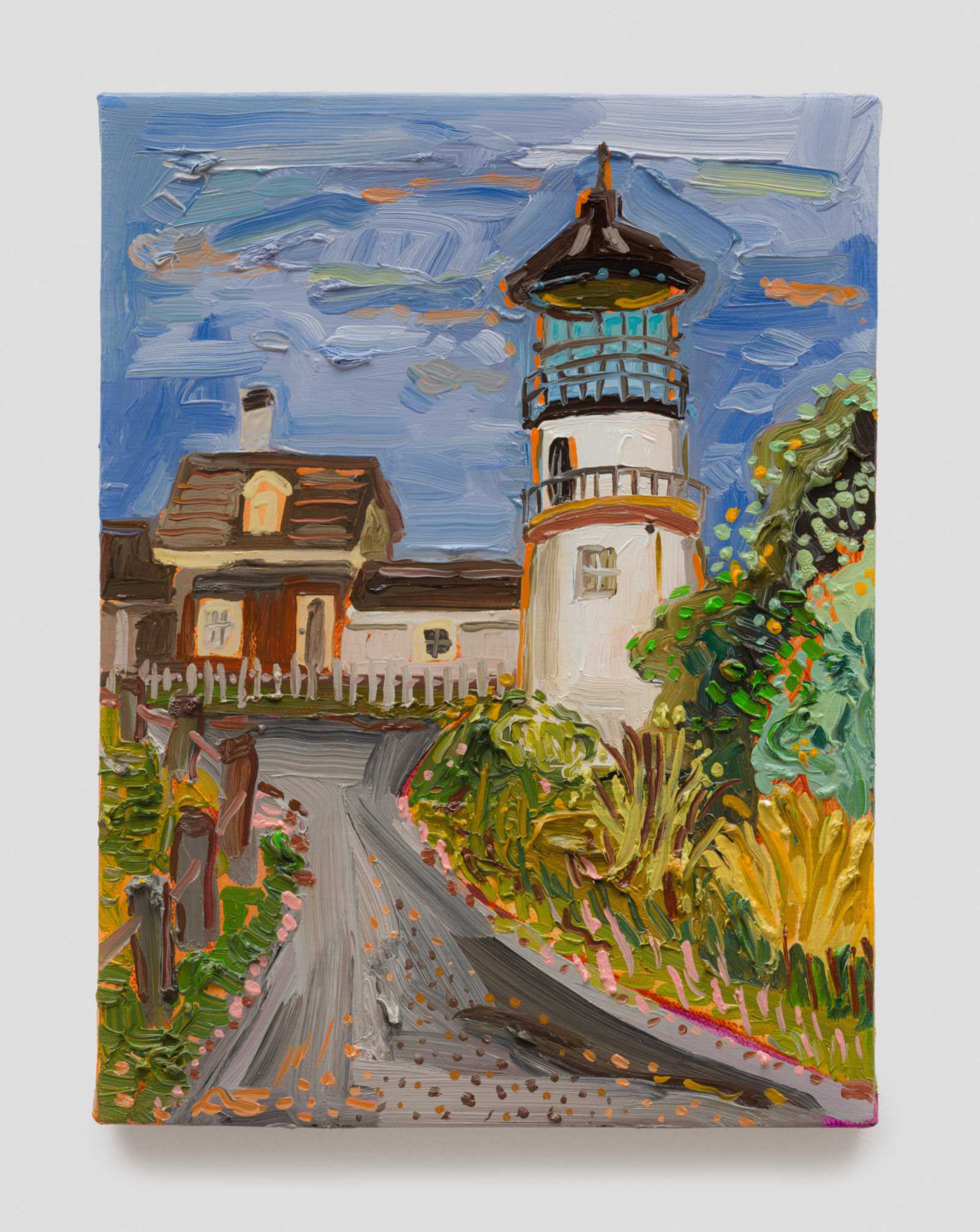
Susan Chen on Painting Where the Hoppers Painted
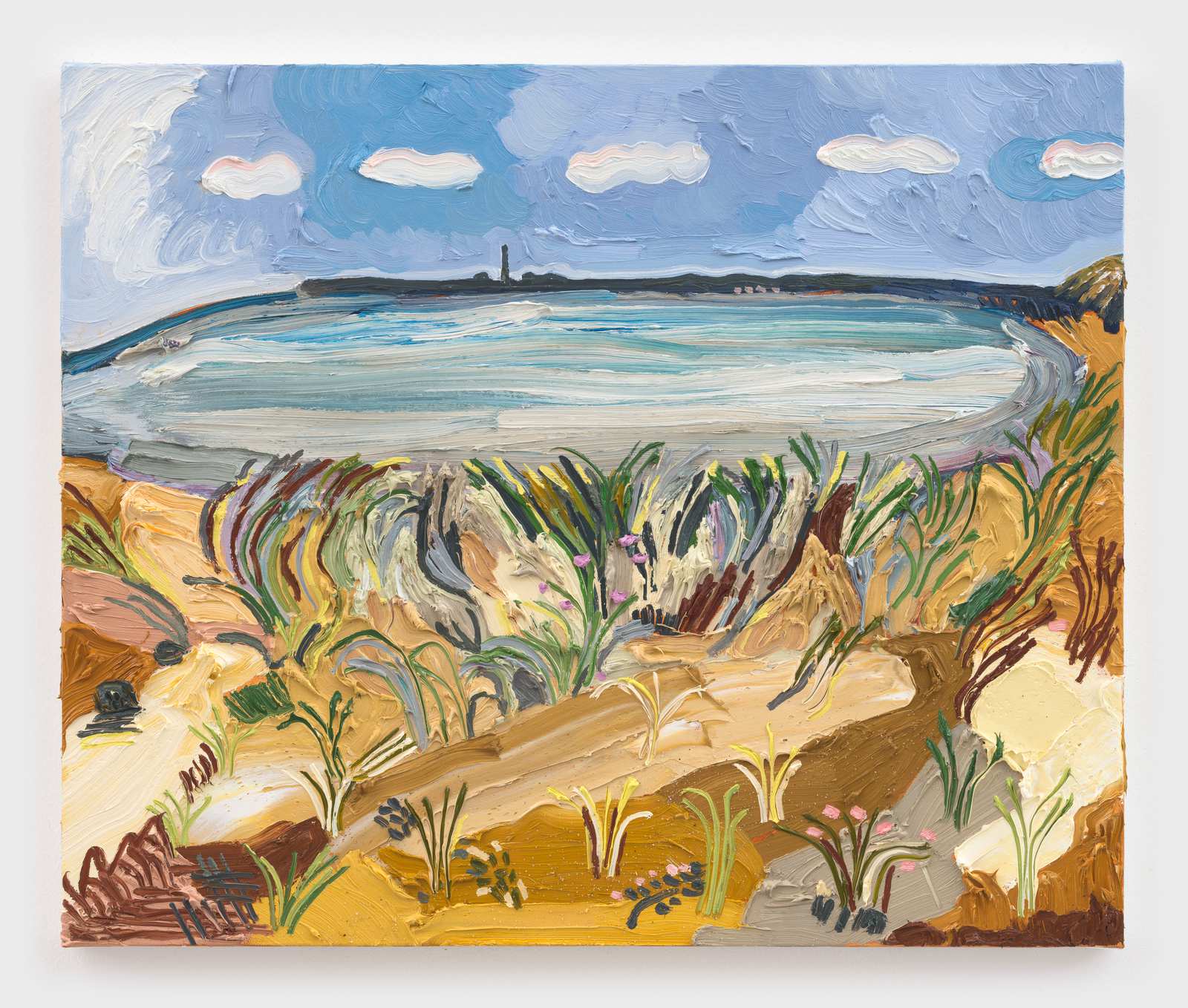
Tell us about “Provincetown.”
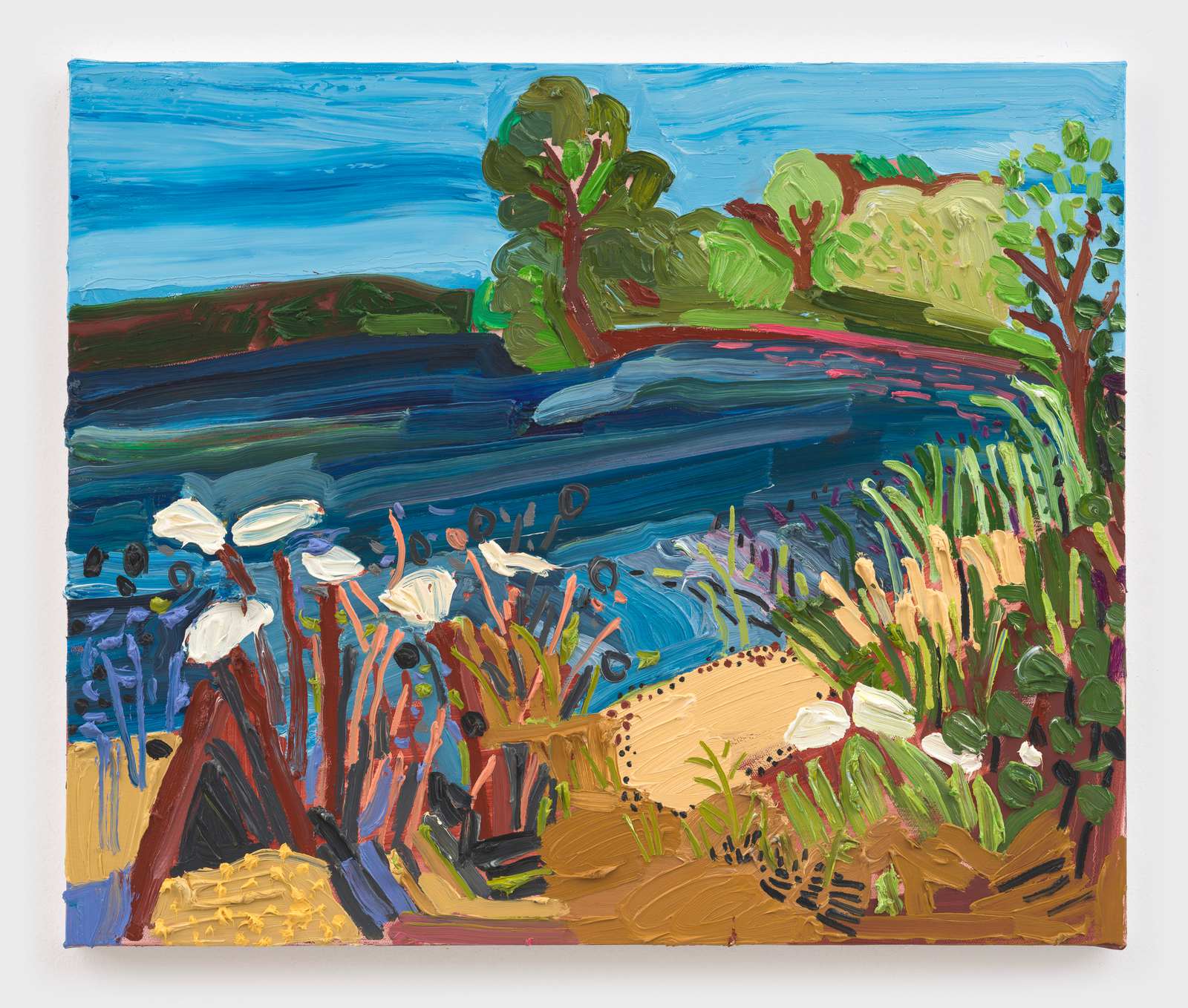
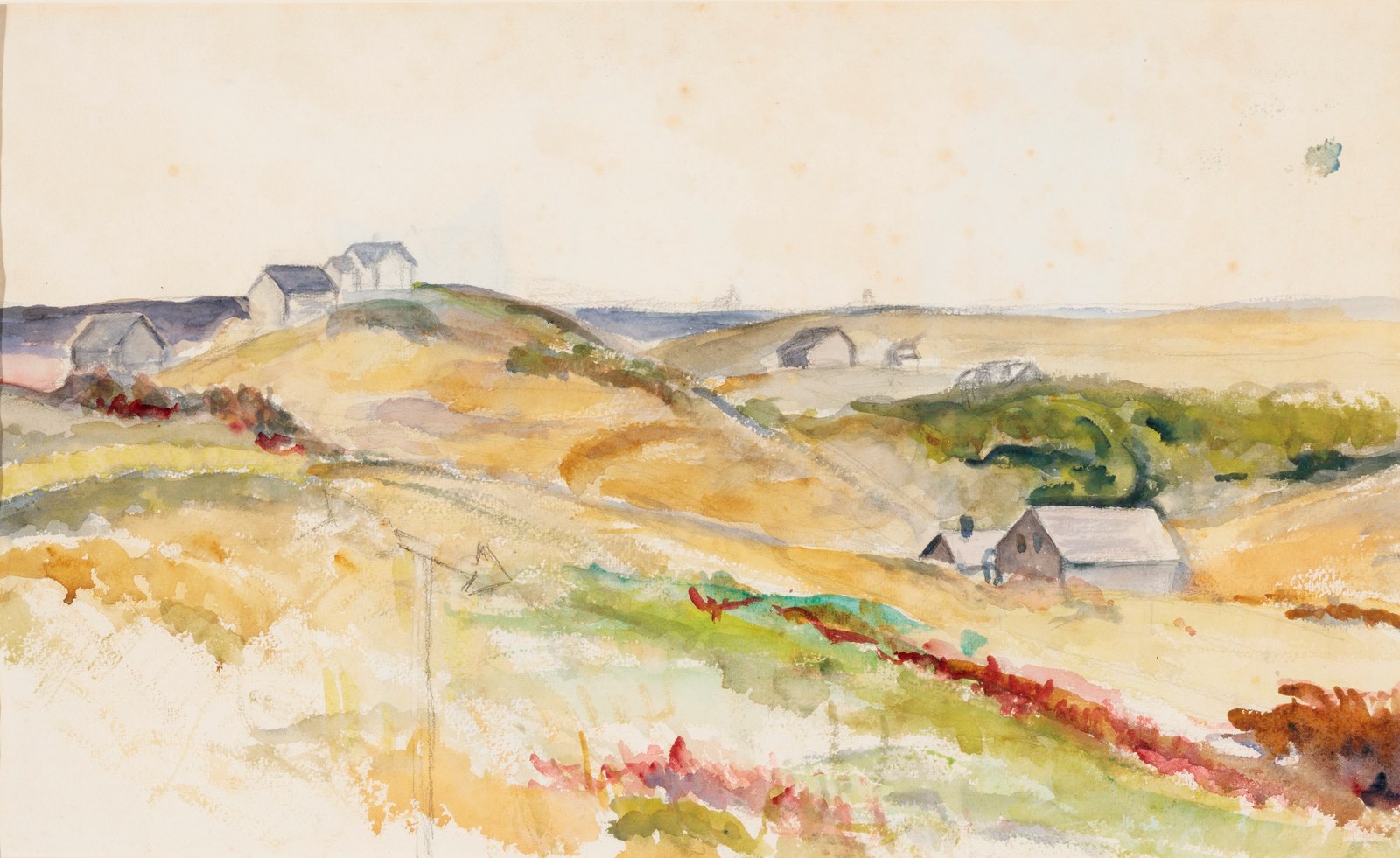
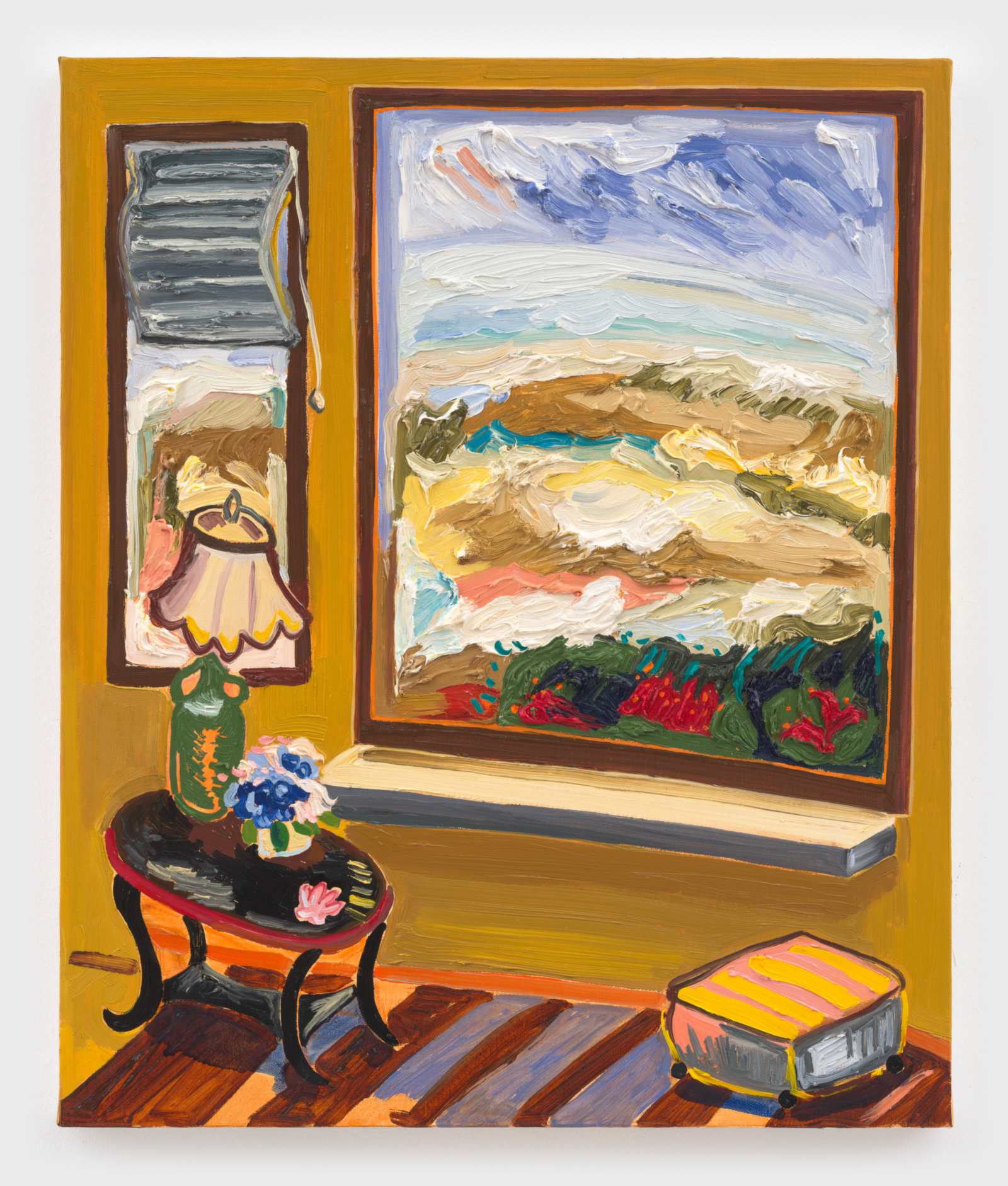
Chen: I was inspired by Cape Cod Bay (1965), a real Edward Hopper painting at the Whitney. I knew exactly where that view was painted from, Corn Hill Beach, so I took my painting cart out there and painted from the same spot. The tower of Provincetown in the distance, and the way the coast stretches on a curve, is an iconic scene of the Cape. Sixty years after Hopper, I wanted to imagine what it would have been like to paint where Edward and Josephine Hopper did.
Nostalgia runs through all of these landscapes, and I think of them as a kind of psychological self-portrait. I’m a first-generation American, and this is a historically significant coast: in 1620, English Pilgrims from the Mayflower first met the Nauset people here. Painting on this little tip of Cape Cod, I often thought about those first immigrants, and it amplified how far away I am from my hometown and family in Hong Kong.
I was also thinking about Svetlana Boym’s ideas in The Future of Nostalgia. She describes restorative nostalgia, which tries to rebuild the lost home exactly as it was, and reflective nostalgia, which stays inside the ache, knowing you can never fully go back. I was painting on this beach in America’s 250th year, thinking about my own place in it and in the lineage of American landscape painting. These landscapes let me process building a home and a family in a new land while carrying a permanent, unresolved longing for the one I left behind.
These landscapes let me process building a home and a family in a new land while carrying a permanent, unresolved longing for the one I left behind.
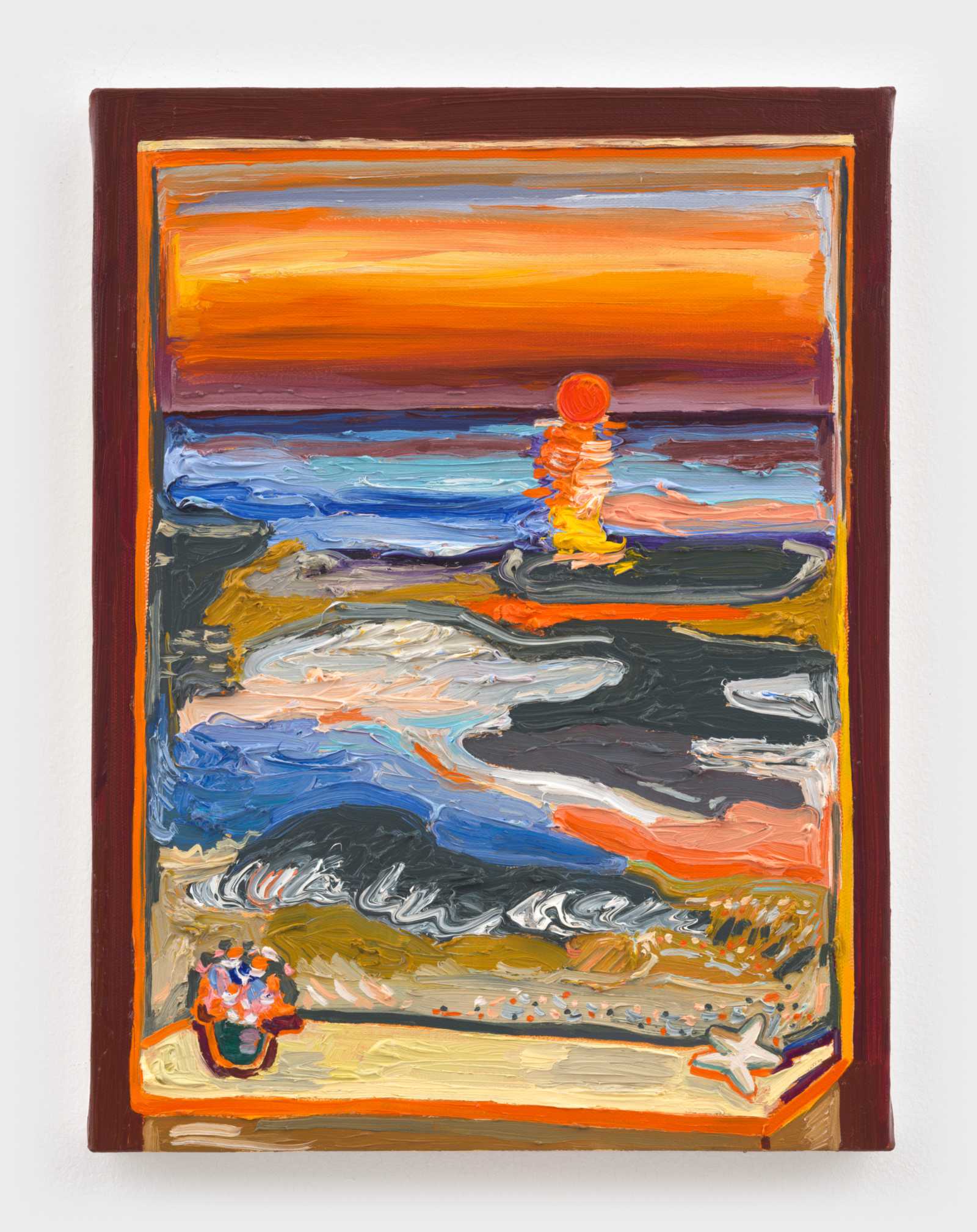
Inside “Rooms by the Sea”
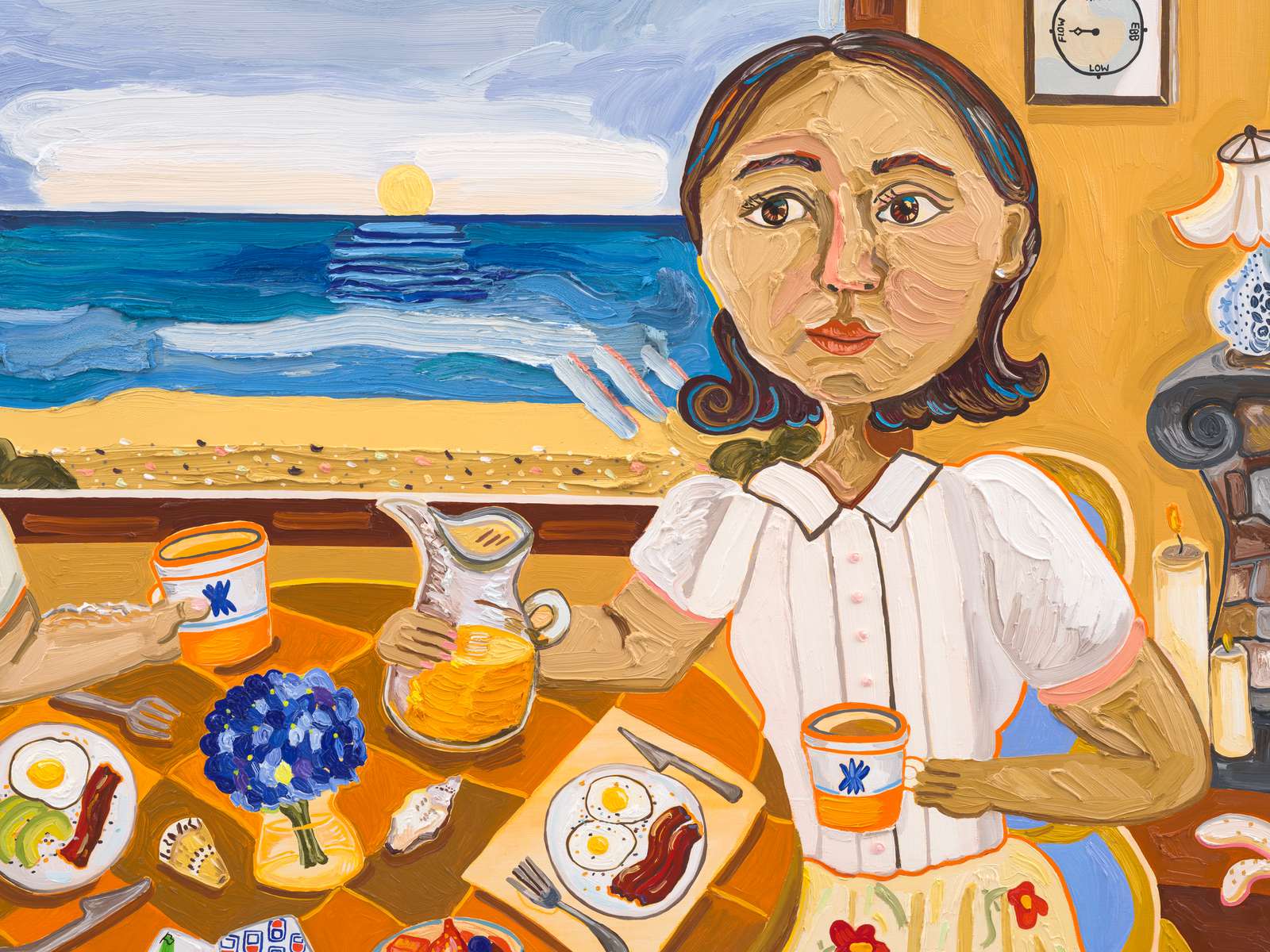
The show is named after your double portrait “Rooms by the Sea.” Edward Hopper’s 1951 painting of the same name shows an empty room with a door open to the water. Who are the two people in yours?
Chen: I love the painting Rooms by the Sea. It’s an interior and a landscape that also works as a psychological self-portrait. Between the thresholds of a simple door frame, there’s the interior of safety and the exterior of adventure, and sometimes in life you get to choose.
I was reading a lot of Gail Levin’s essays at the time, about Josephine and Edward Hopper’s lives on Cape Cod. Josephine had received an inheritance from her family, which allowed them to build their house there. Edward built it with an art studio for himself, which Josephine was sometimes allowed to share. She was an artist before he was. In several diary entries, Josephine notes that when Edward hit creative blocks, she would paint outside, or with him, to inspire him out of them. They also had a cat, whom Josephine adored, but Edward not so much. I kept imagining this couple living at the Cape in that house and what their lives might have been like.
I also got married last year, and having only just reached our one-year anniversary with my husband, I painted my husband and myself into a scene of us living together at the Cape, with Hopper’s room as a nod to the Hoppers. I married into an American family, and I was thinking about what that meant, down to something as simple as eating an American breakfast, which plays into a more complex idea of daily assimilation.
There are Mille Bornes cards on the table, a nod to my discovery that Edward and Josephine were both Francophiles, each with a French grandparent. And it’s also one of my favorite card games to play at the Cape. My dog is in the painting, much as Josephine included her cat in some of their Cape artworks. Hydrangeas, seashells, a tide clock and a little book with the iconic Nauset Lighthouse float in the room too.
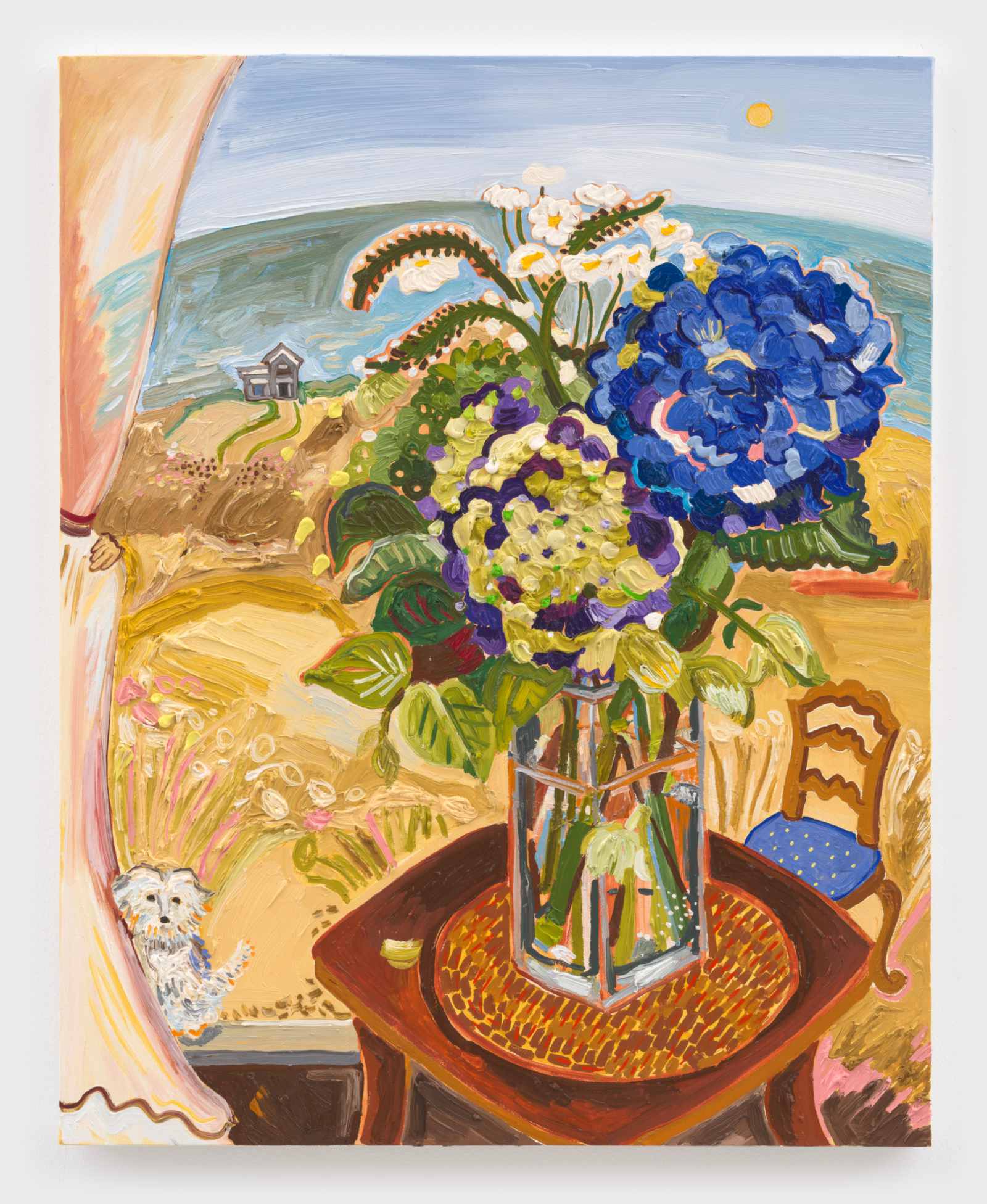
Josephine Hopper’s “Obituary / Fleurs du Temps Jadis” is in the show, and one of your new paintings is called “Flowers of Days Gone By.” How did her painting lead to yours?
Chen: Flowers of Days Gone By is one of the first paintings I made this year, when I first got to the Cape and needed a painting to get me going. Sometimes it’s fun to copy a master painting, so I painted a vase of hydrangeas in a composition similar to hers, just to get started.
I’d come across a diary entry by Josephine Hopper from September 16, 1948, and it was completely charming. It’s an internal monologue about painting these dead flowers from her Cape bedroom, and I think every artist can relate, because she’s negotiating with the painting and the logistics. She never says who the obituary might be about. But at the Cape, time can feel ample, like you’re in purgatory and the days go by one after another in a strange, dreamy way.
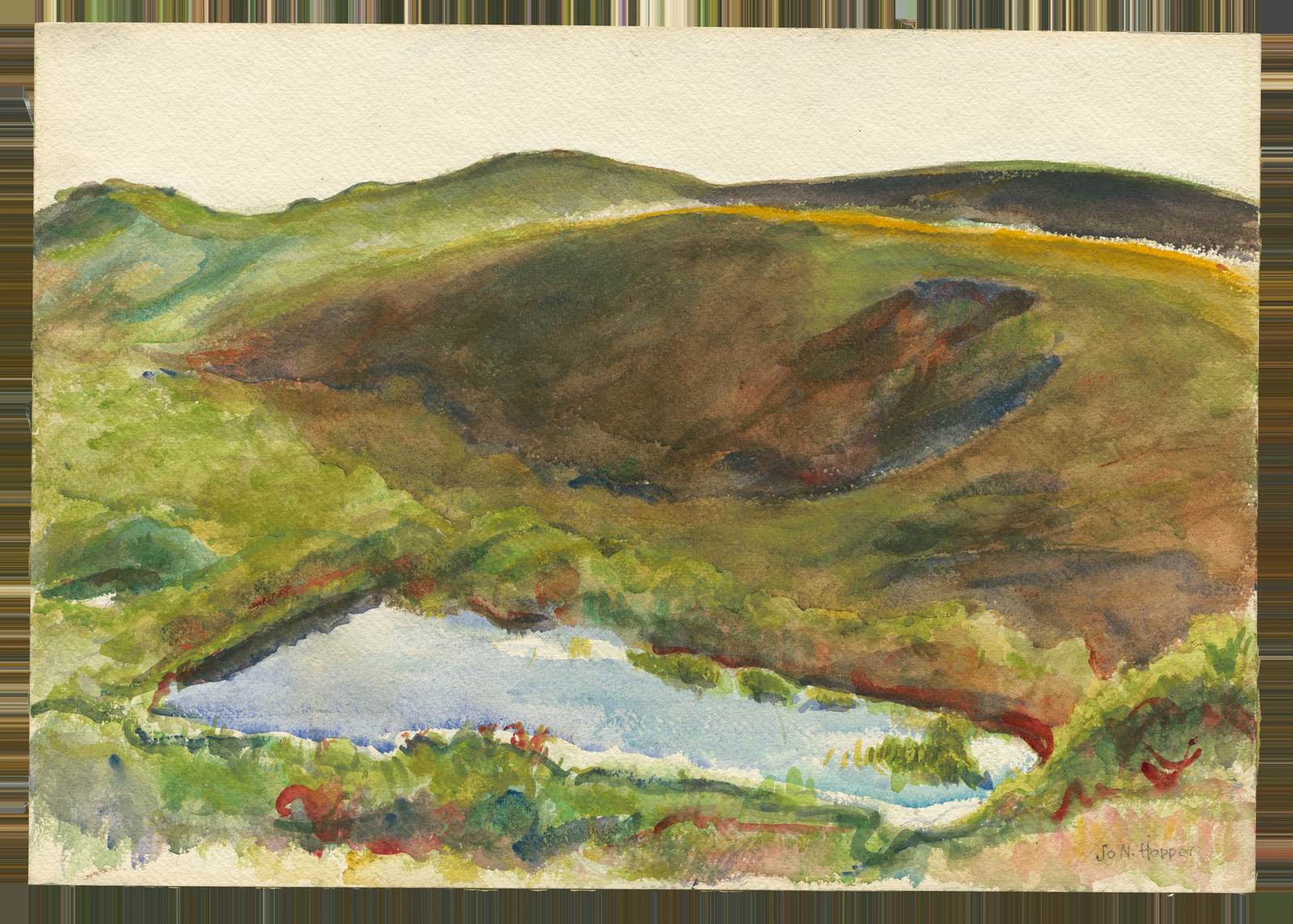
Sept. 15, 1948: Got started on old canvas, with beginnings of golden rod … rigged up big bouquet of dead flowers to be in place where golden rod failed to quite materialize. May call it “Fleur du Temps Jadés.”
Sept. 16: Back before 5 & painting dead flowers in bed room. It takes so long to rig up easel, stand for flowers, table erect for palette, drag things from kitchen, from studio, rearrange bedroom—and just try to make the easel stand! When the sunset pours in on those dead flowers they come to a life of their own transfigured. If I could catch them.
Sept. 22: Nothing could be more disimilar than what has been cooking at the same time in these two rooms. E’s deadly simplicity & lack of interest in color for itself. My dead flowers turn out to have plenty of color which I made no effort to resist, naturally—but can’t do justice to it either. But it is good to be painting again—to find something happening.
From Josephine Hopper’s diary, fall 1948. Josephine Nivison Hopper Diaries (1933–1956), Permanent Collection, Archives of the Provincetown Art Association and Museum, Provincetown, Massachusetts, where the full transcripts can be read.
You won the Hopper Prize in 2020, the year you finished at Columbia. Now your first museum solo is in the house where Hopper grew up. How does that feel?
Chen: Honestly, it’s a complete coincidence. The Hopper Prize and the Edward Hopper House Museum are completely separate nonprofits that, surprisingly, have no crossover with one another. It’s a lovely coincidence. I’ll take it as a sign of encouragement from the universe.
It feels insanely surreal to show in Hopper’s house. There’s a real mystical energy about the place. When we were installing, it felt like Edward and Josephine had just gone out to get coffee and were around the corner, about to come back and finish the job. We hung 36 artworks in one day with just one art handler, which was amazing. In some strange sense, it feels like they’re right there with me, and we’re having a spiritual conversation about American painting.
When we were installing, it felt like Edward and Josephine had just gone out to get coffee and were around the corner, about to come back and finish the job.
As a painting dork, it’s a very special feeling to get to say my name in the same sentence as these great American painters. Painters never work in a silo. We work through a long lineage, and I’m grateful to those who came before us and laid the groundwork for us to keep building and pushing on.
“Susan Chen: Rooms by the Sea” is on view at the Edward Hopper House Museum & Study Center, 82 N. Broadway, Nyack, New York, through Feb. 21, 2027. Across the river in Tarrytown, Paula Hayes’s garden at Lyndhurst is open through December. For more shows by women artists and curators, see our On View list.