Ovartaci and the Refusal of Fixed Identity
Ovartaci lived most of their life inside a psychiatric institution, yet their work moved freely across time, gender, belief systems, and imagined past lives. In this piece, Alexia Marmara traces how Ovartaci used making as a way to escape fixed identity and build a world where transformation was necessary.
“…The case of Ovartaci, so rich and wild in many respects, can shed new light on what it means to inhabit a social world that is out of order. What does it mean to find new ground where there is no ground, or to recreate oneself on the basis of a certain destabilizing groundlessness?” (Brian Benjamin Hansen, The Signature of Madness.)

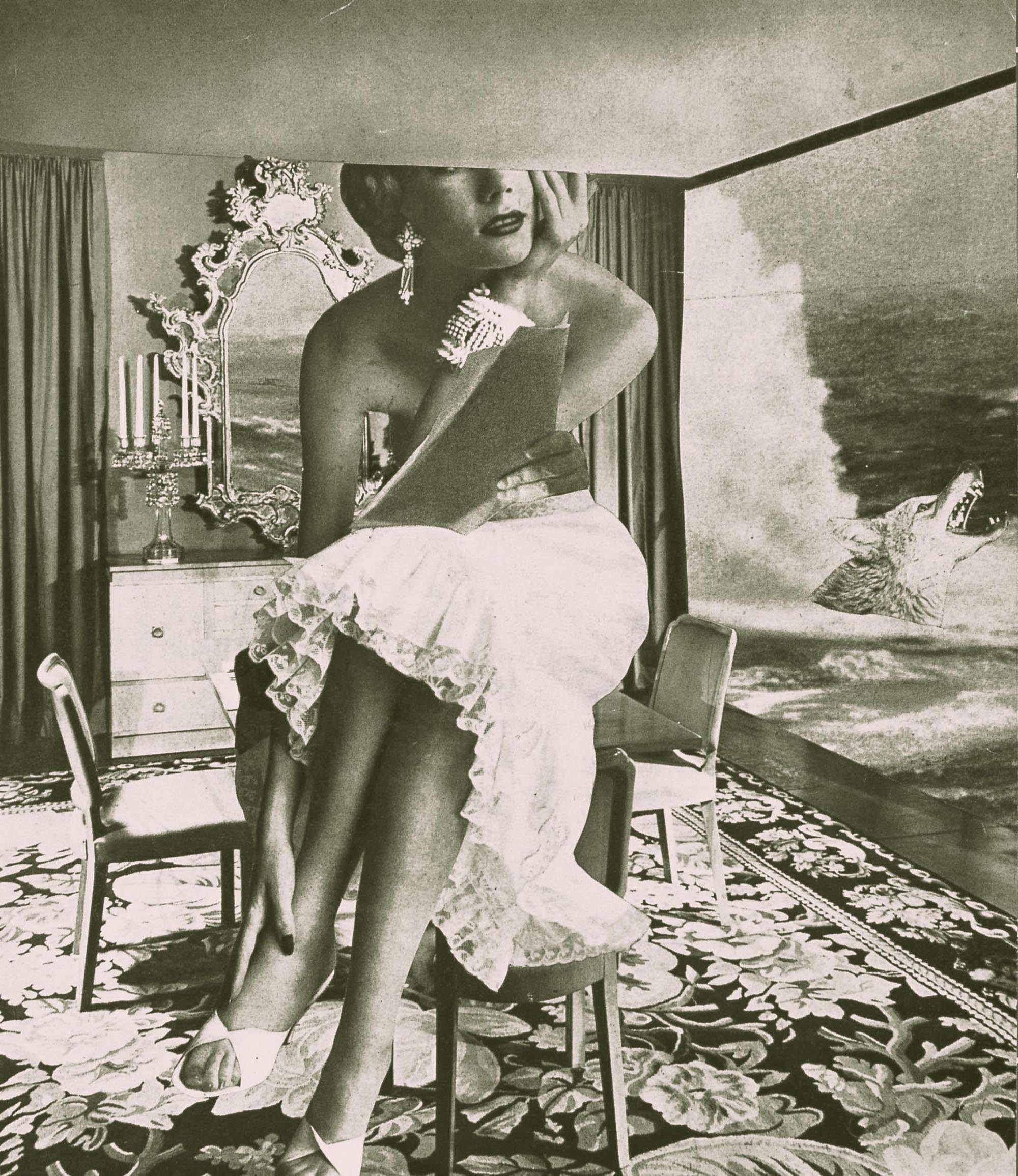
Gouache and pencil on paper,
32 × 22 cm.
Photo by Erik Balle Povlsen.
The genius contained in the person of Ovartaci made them unclassifiable. Audiences love the work, others feel distressed by the stories, viewers voice compassion and sympathy for Ovartaci’s lifeline, art historians try to label them, medical professionals and practitioners try to study them, and a large and loving fan club continually adores them. In their living, they found ways to divert and distract from all that had been demanded of them. However stifled in their everyday, Ovartaci stitched and moulded their personal reasoning onto diagnosed psychosis and schizophrenia. Ovartaci unappeasably crafted heavenly and delicate bodies “to be the broken crystal that reflects and casts light on the strange task of existence.” (Brian Benjamin Hansen, The Signature of Madness.) With a foot remaining in the memory of each of their past-lives, their figurines and depictions of fluid beings and ancient belief systems were in fact windows through which we could accompany them on their soul’s everlasting journey.


Metal and plaster,
59cm.
From Louis Marcussen to Ovartaci
Born under the name Louis Marcussen in 1894, in a family of 12 children, Ovartaci was perceived as being a fragile child, discomfited in a body and a name they did not recognize. However, at such an early age, they were unable to articulate what caused their discomfort. Trained as an industrial painter, they left their home in Denmark for Argentina in 1923. Upon their return five years later, Louis Marcussen unleashed behavior suggesting emotional disturbance and paranoia and incidents involving rifles lead to their family’s wish to have them sectioned. They were transported to the psychiatric hospital in Risskov, Aarhus. From this day onwards, Ovartaci will remain in the confines of the medical and psychiatric system until their death in 1985.

Gouache on paper, double-sided,
95 × 38.5cm.
Early on during their stay, they showed signs of a certain fascination for the medical hierarchy in institutions. Their first demonstration of self-improvement is reflected in their chosen name, Ovartaci. Overtoss means “most important” in Danish, with Ovartaci translating to ‘Chief Lunatic.’ Almost immediately after joining the institute, Ovartaci painted, decorating every inch of their room and peppering it with statues of feminine deities, fashioning dolls that became their partners in sequestration. During assessments and conversations with psychiatrists, Ovartaci spoke of the sophistication of women as living beings who appeared to the painter as persons embodying the perfect form and figure.
“Ovartaci” is the name of a sage, a universal traveler, bridging times and worlds.
This respect for, and exploration of, femininity culminated in an official request for gender-affirming surgery in 1951, pinpointing a gesture to voice the difficulties that stemmed from being a gendered being. Though they were granted a bilateral castration (a surgical removal of testicles) this did not appease their ill feelings towards genitalia. A string of new names (Goncalez, Ovataci Ivarytasi, Alexandra…) and a substantial amount of pleading gifts to their doctors preceded their taking matters into their own hands: after a first failed attempt, they cut or hammer off their penis, and throw the remains away in order to avoid having doctors sew it back on.

Pencil and gouache on paper,
55 × 40 cm.

Gouache and pencil on paper, double-sided,
27 × 21 cm.

Gouache on paper, cut out,
38 × 12.5 cm.

Unknown measures and materials.

Den Kinesiske Formel / The Chinese Formula,
Gouache on canvas, 151.5 × 82.5cm.
Photograph from Ovartaci and the Art of Madness 2017.
Photo: Anders Sune Berg. Collection: Jørgen Winther.
Ovartaci continued trades and bargains until, finally, they were granted a surgical operation to construct a vagina. They wrote to the Ministry of Ecclesiastical Affairs and Justice, claiming their birth name to be Louisa Pupparpasta, asking hereafter to be addressed as Miss and to officialize their name as being Ovartaci Pupparpasta. Finally, they requested formal permission to dress in women’s clothes. This was met with quarrels and battles, with Ovartaci’s appearance viewed as indecent. Amidst all the change and ebbs and flows in their wellbeing, Ovartaci indefatigably painted and created, with the single aim of “escaping from all pre-given identities.” (Brian Benjamin Hansen, The Signature of Madness.)
Art as Escape from Pre-Given Identities
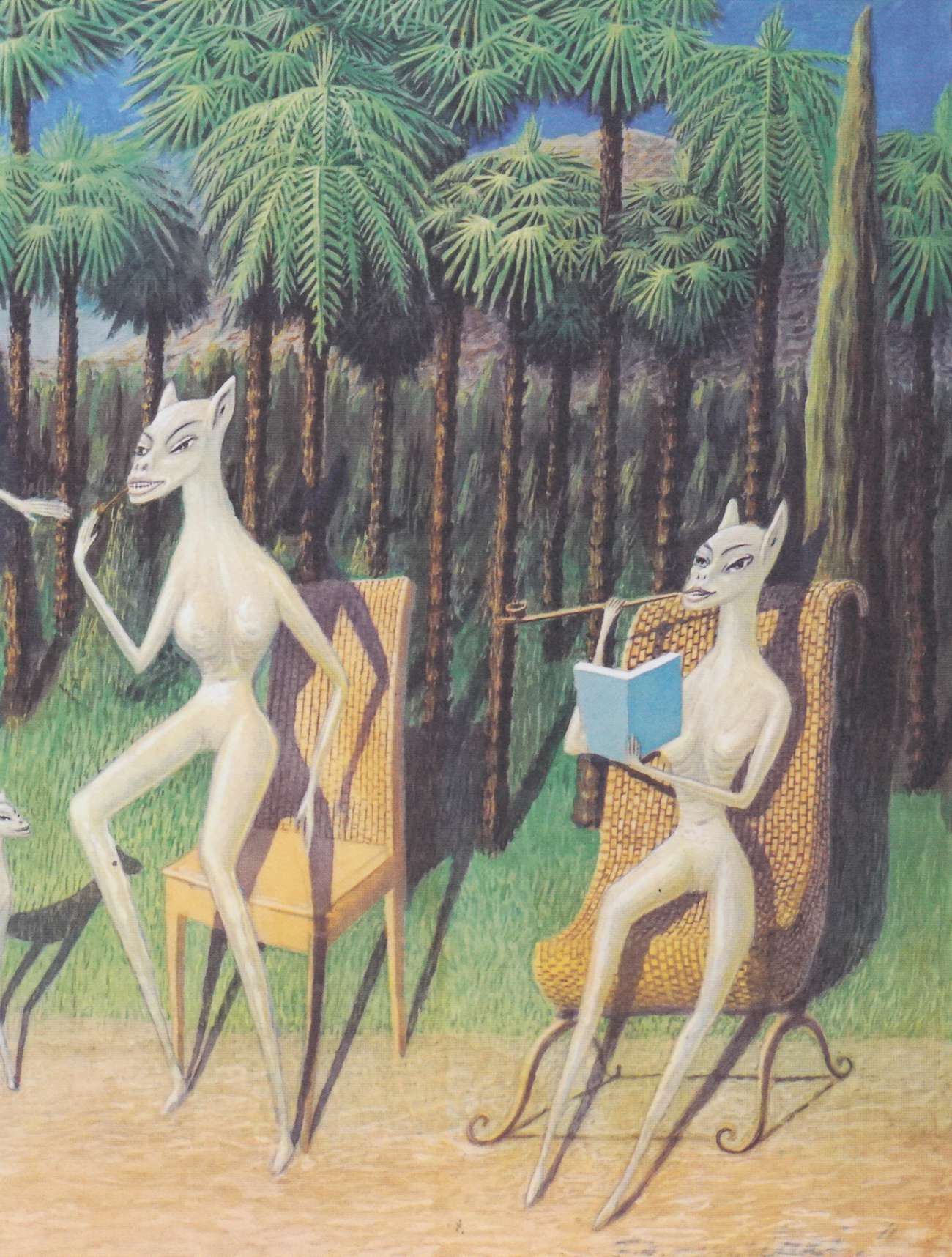
Paintings of “Cat-monkey-amphibians-of-female-gender-with-angel-alien-features-passing-on-hooves-and-stilettoes-through-a-morphogenentic-birth-canal” (Ferdinand Ahm Krag, High Heels) and the scenes packed with mystical and spiritual references within their paintings suggest the work acted as an chasm into their spirit’s entire catalogue of lifetimes. Stories and experiences were secured and collected during their essence’s myriad embodiment. When describing their body of work, whether a collage, a painting, a mask or a “deviant incarnation” (Kathrin Busch, Queer Lines of Flight: Ovartaci), Ovartaci would unite the messages within their creations, deliberating over reincarnation, their thoughts on life, technology or religion, energetically speaking of the way they could hop from their deaths to their next lives. Medical reports suggest a vibrant imagination but the artist confirms many lives were lived in many different shapes and they had access to the remembrance of them.

Gouache and pencil on paper, cut-out, double-sided,
22 × 27.5 cm.

Stalin,
Gouache on cardboard,
250 × 40 × 8cm.
Photo by Erik Balle Povlsen.
Once a puma, then the daughter of a pirate, Stalin’s daughter, a tortured subject in Ancient Egypt, a bird of paradise too, Ovartaci was unfixed: a constellation of beings and skills. They experienced confinement in a bedroom in which they placed deities and a mirror decorated with a painting of one of their signature ladies. This face permitted a preferred reflection, enjoyment of their physicality and freedom within a body operating in their small kingdom. One that held the spirits of their continual personification, across centuries and dynasties. Ovartaci was a teacher and every time a new doll was spawned, spirits of their myriad lives were held and celebrated, symbolizing their representation of “identity as existing in constant flux.” (Katie White, Self-Taught Artist Ovartaci Made Fantastical Creations in a Psychiatric Hospital for Over 50 Years. Now They’ve Found a Home in the Art World)
“Inside some of Ovartaci’s dolls there are magical devices to make them come alive. The doll Pupparpasta concealed a handwritten 44-page manuscript with poems in Spanish. […] And inside the doll Ivarytaci was […] a ‘brain-machine,’ a round piece of cardboard with Spanish words around its edges and in the middle, as if the disc could spin inside the head of the doll to produce words and answers to somebody interviewing it.” (Brian Benjamin Hansen, The Signature of Madness.)
Isolation, Otherness, and the Artist as Universal Traveler
Despite being granted certain privileges such as paints and materials, Ovartaci lived their life in an environment of judgement and isolation. Forced separation from the world outside would weaken anyone’s bile. The artist within the body that named itself Ovartaci gathered strength “by connecting to the life force of the things around [them] and [brought] it back into the grey of the every day. This way of reading Ovartaci thus gives us a clue for reading the name: “Ovartaci” is the name of a sage, a universal traveler, bridging times and worlds. It is not the name of a shy boy from rural Denmark, but of a [person] of the world.” (Brian Benjamin Hansen, The Signature of Madness.) This name chosen to represent the journey they were on in this lifetime was about exploring the many worlds they had incarnated. “Ovartaci” was the umbrella for their visions, the safety within “otherness” through which they could all be visible and respected. With diligence, discipline and care, Ovartaci shaped and sculpted perfection onto their experience and “turned their immediate surroundings into reality interwoven with visionary lines of flight.” (Katie White, Self-Taught Artist Ovartaci Made Fantastical Creations in a Psychiatric Hospital for Over 50 Years. Now They’ve Found a Home in the Art World)
Healing Through Art
In Flame People: The Chief Physician and the Chief Lunatic of Risskov, psychiatrist and friend of Ovartaci, Johannes Nielsen, speaks of his friendship with his patient, “Ovartaci […] to a very large degree healed [themselves] through [their] unique art - and thereby broke free from the straitjacket of the mind,” asserting it was through creativity that the patient was able to “harmonize their life.*” Ovartaci’s paintings distill the magnitude of their respect for their forms and bodies. With feline faces, exaggerated skeletons, the artist was creating a sisterhood within their cell: forms that they perceived as embodying perfection could therefore live alongside them. Ovartaci was encapsulating their substance, and protecting them so, in return, the crafted beings were manifesting safety. Insignia, symbolics, writing and religious connotations enabled the artist to place them in a higher dimension, encouraging the vibrant transformations emanating from each piece. The figures wore heels so the ladies on the canvas are elevated, prolonged and encouraged to extend themselves into their travels. Ovartaci was unconcerned with grounding as the only certainty they possessed was change and movement.
In the last years of their life, medical records report on the artist’s desire to return to being Louis Marcussen and dressing in men’s clothes. Their final effort to challenge strict notions of ‘becoming,’ adding a supple quality to the identity of Ovartaci. It is certain the creations safeguarded in Museum Ovartaci in Aarhus emanate and vibrate with the ancestral knowledge this singular artist encased.
“I started out as a bird of paradise and during my flight I was finally transformed into a seagull and arrived in Greenland, but that was very many years ago.” This is one of the first sentences in Ovartaci: Pictures, Thoughts and Visions of an Artist. It is about being born in 1894, [as] one who was already there more than 3000 years ago, and who has existed in many times and places, in different social roles, from a disciple at a temple in ancient China to a little girl on an island between England and Ireland. What is this being? Why is it that the life of Louis Marcussen, the industrial painter from Ebeltoft, does not seem to be enough for this being who claims to have lived all these other lives?” (Brian Benjamin Hansen The Signature of Madness.)
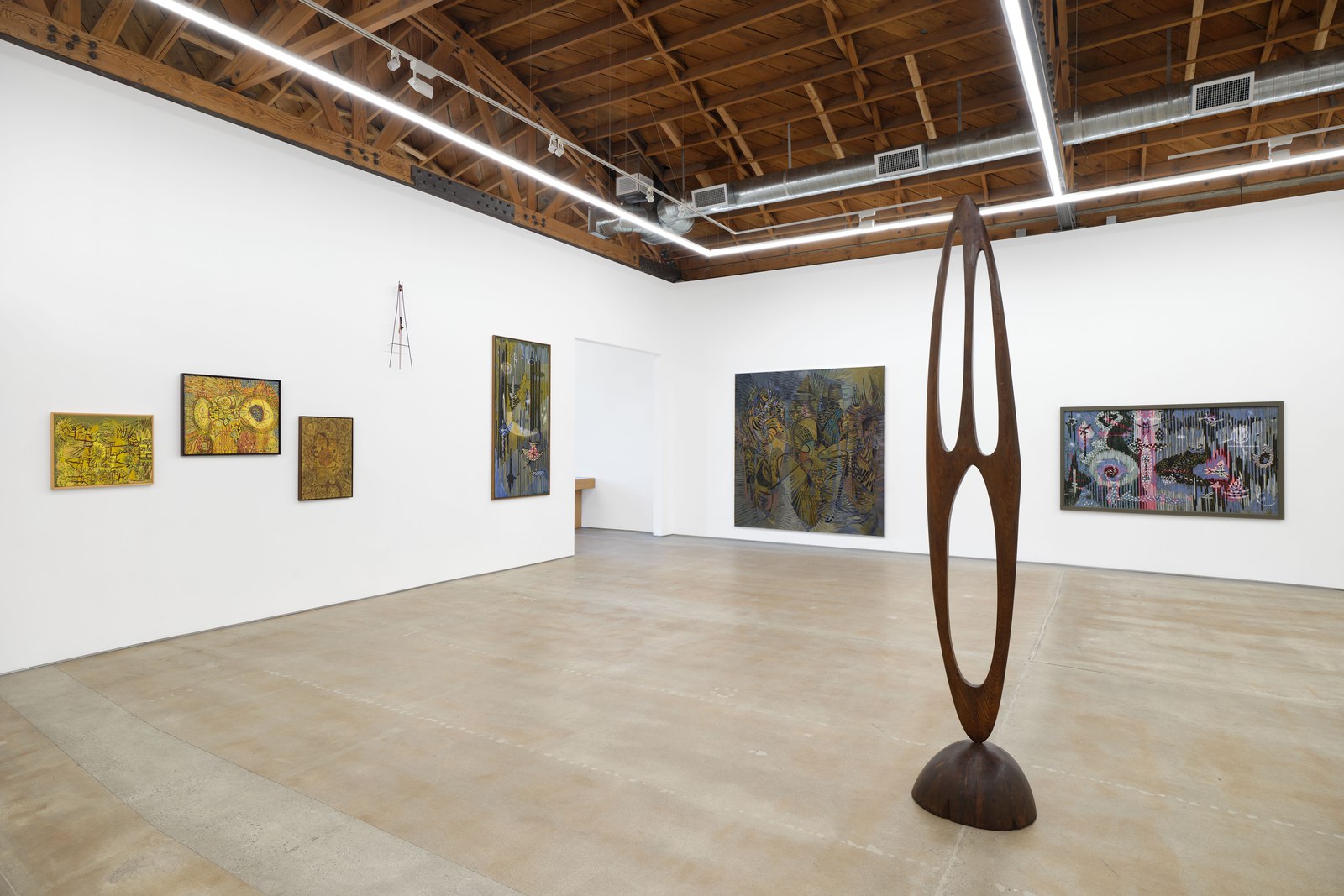
Featured image: Ovartaci, Details Frk. Ovartaci / Miss Ovartaci
Gouache on canvas, 93 × 161cm.
All images from “Ovartaci: The Signature of Madness,” Brian Benjamin Hansen, 2022.